Travel guide


Travel guide
How to Rent a Car: Everything First-Time and Occasional Renters Need to Know
5 min read·30 Apr 2026 14:53·Author: EmilsTable of contents 

Renting a car for the first time, or just not doing it often enough to remember how it works, can feel more complicated than it should be. Uncertainties, multiple fees, insurance upsells, confusing terms and conditions, fuel policies that only make sense in hindsight. Most people arrive at the rental counter underprepared and end up paying more than they needed to.
This guide covers everything. Whether you are picking up your first rental or you have been caught out before and want to do it right this time, we walk you through the basics of what you need to qualify, how using a comparison platform saves you money before you even reach the counter, and what to check on the car before you drive off the lot.
By the end, you will know exactly what to expect and, more importantly, what to watch out for.
Use a car rental comparison platform
The easiest way to start is by using a car rental comparison platform, which lets you view prices, car types, and rental conditions from multiple providers in one place. Instead of checking dozens of rental company websites individually, platforms like EconomyBookings help you quickly find the best deals based on your destination, dates, and preferences. This not only saves time but also makes it easier to compare important details like insurance options, fuel policies, and customer ratings before you book.
It’s worth checking a guide on how to get a cheap car rental on our platform to understand how timing, location, and car type can impact the final price.
What is needed to rent a car
Before renting a car, make sure you have the following:
-
Valid driver’s license (usually held for at least 1–2 years)
-
Physical ID or passport (digital copies are typically not accepted)
-
Credit card in the main driver’s name (debit cards aren’t accepted)
-
Minimum age requirement (often 18–21+, depending on location and supplier)
-
International Driving Permit (IDP) (if required in certain countries)
Requirements may vary by provider and destination, so always check the rental terms in advance.
Understanding Car Rental Insurance (Without the Confusion)
All rental cars come with basic insurance, as it is mandatory for suppliers. However, this usually includes a high deductible, meaning you could still pay a significant amount if something happens.
To reduce this risk, platforms like EconomyBookings offer full coverage, which can protect you against most damage, theft, and related costs.
Keep in mind that insurance rules can vary by supplier, location, and country of residence. In some cases, rental companies may still require additional coverage at the counter if it is stated in their terms.
For rentals within Europe, options like Renasco insurance in our platform are designed to better match local requirements, making it less likely that you will need to purchase extra insurance at pickup.
It is always a good idea to check what is included in your booking and review the supplier’s terms in advance.
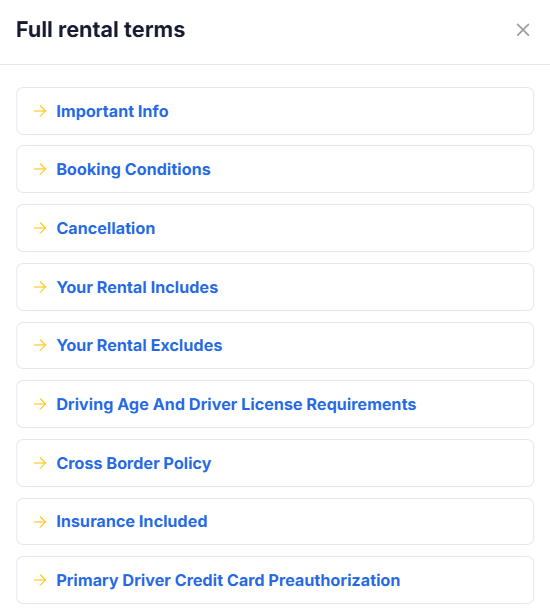
How to Read and Understand Rental Terms & Conditions
Rental terms and conditions can vary significantly between providers, so it’s important to review them carefully before booking. When using a comparison platform, always double-check what is included and what is not, as details like insurance coverage, fuel policy, mileage limits, and deposit requirements often differ by supplier.
On platforms like EconomyBookings, you can easily compare these details - but it’s still your responsibility to confirm the specifics for your selected offer. Taking a few extra minutes to review the terms can help you avoid unexpected fees or surprises later on.
To better understand how fees are structured, you can also review all car rental fees and costs explained before booking.
How to Choose the Right Car and Rental Company
Choosing the right rental comes down to both the car type and the supplier. Platforms like EconomyBookings work with trusted suppliers and show real customer ratings, so you can compare options based on actual experiences, not just price. It’s worth noting that ratings can vary by location, meaning a supplier may perform well in one city but not in another. This helps you make a more informed decision when selecting a reliable option.
When it comes to the car itself, think about your travel plans:
-
City trips or narrow streets: a compact or economy car is easier to drive and park
-
Long road trips: a mid-size or sedan offers more comfort
-
Mountains or rough terrain: an SUV provides better handling and space
-
Group travel: consider larger vehicles like vans or minivans
Balancing price, ratings, and the right car type will help you find a rental that fits your needs without surprises.
What to Check When Picking Up Your Rental Car
Before driving off, take a few minutes to carefully check the car and your documents:
-
Bring all required documents, including your driver’s license, ID, and credit card
-
Have your rental voucher ready (printed or digital, depending on supplier requirements)
-
Inspect the car for any damage and make sure everything is recorded in the rental agreement
-
Take photos or videos of the car as proof of its condition at pickup
-
Ask staff to note any unlisted damage before you leave
Doing this helps you avoid disputes or unexpected charges when returning the car.
What Happens at the Rental Desk
When you arrive at the rental desk, the process is usually quick, but it helps to know what to expect:
-
Provide your documents: driver’s license, ID or passport, and credit card
-
Show your booking voucher (printed or digital)
-
Sign the rental agreement, which includes key terms like insurance, fuel policy, and return conditions
-
Review any optional extras, such as additional insurance or add-ons
-
Receive the keys and instructions for picking up the car
Before accepting any extras, make sure you understand what is already included in your booking and what is not. Anything listed in the terms and conditions is mandatory, while additional products offered at the desk are optional. Take a moment to decide what you actually need, and don’t feel pressured to accept every upsell.
Car Pickup and Return Rules
Picking up and returning your car on time is important to avoid extra issues or charges. Some suppliers may offer a short grace period, but this is not guaranteed and varies by provider.
-
Arrive on time for pickup to ensure your booking is still valid
-
Always return the car on time to avoid late fees or additional rental charges
-
Check your pickup and return time and location in advance
-
If you expect to be late, inform us as soon as possible so we can assist
-
If the rental desk is closed, you can contact our support team for guidance
Common Mistakes First-Time Renters Make (And How to Avoid Them)
Avoiding a few common mistakes can save you time, money, and stress:
-
Not reading the terms and conditions and later discovering extra fees for crossing the border, insurance, mileage, etc.
-
Skipping insurance or not understanding coverage, which can lead to high costs in case of damage
-
Not inspecting the car at pickup or failing to document existing damage
-
Returning the car to a different location without selecting it during booking, which can result in a one-way fee
-
Missing pickup or return times, resulting in cancellations or extra charges
Final Checklist Before You Rent a Car
Before you book and pick up your rental car, make sure everything is in order:
-
Compare deals on a trusted platform and check supplier ratings
-
Read the rental terms and conditions carefully and review what is included (insurance, fuel policy, mileage, extras)
-
Prepare required documents: driver’s license, ID/passport, credit card, voucher
-
Choose the right car type for your trip and destination
-
Decide on insurance coverage to avoid unexpected costs
-
Plan your pickup and return times and locations
-
Be ready to inspect the car at pickup and document its condition
A quick check before you travel can help ensure a smooth and hassle-free rental experience.





Find and compare cheap car rental deals






Get the AppBook faster with EconomyBookings
- All trips in one place
- Instant confirmation
- App-only deals