Travel guide

Industry insights
Service Friction in Car Rental 2026
30 min read·09 Apr 2026 15:28·Author: Alen BaibekovTable of contents 

Quick summary
Car rental is one of the few services where the biggest problems don’t come from the product itself, but from everything around it. From booking to pickup and return, the customer journey is filled with friction - unclear terms, deposits, insurance confusion, and operational pressure at the counter.
This report introduces the Service Friction Index - a way to describe where and why the car rental experience becomes difficult, unpredictable, and stressful for customers. It’s a structured view of how friction builds across five key stages: selection, booking, pickup, driving, and return.
Based on internal large-scale data and real-world observations, the analysis shows that these issues are not random. They are the result of how the industry is designed.
The goal is to explain the system, highlight where it breaks, and show what needs to change to make the experience more predictable for customers.
Where the customer journey in car rental becomes harder-and why the industry pretends not to notice
Research prepared by the analytical department of EconomyBookings.com together with Almaza Pirha, renowned blogger and chief editor of Baltics Cloude magazine-the flagship platform of Booking Group-under the direction of Co-CEO and co-founder Alen Baibekov.
Car rental is one of the few consumer products that manages to disappoint the customer before they've even turned the key.
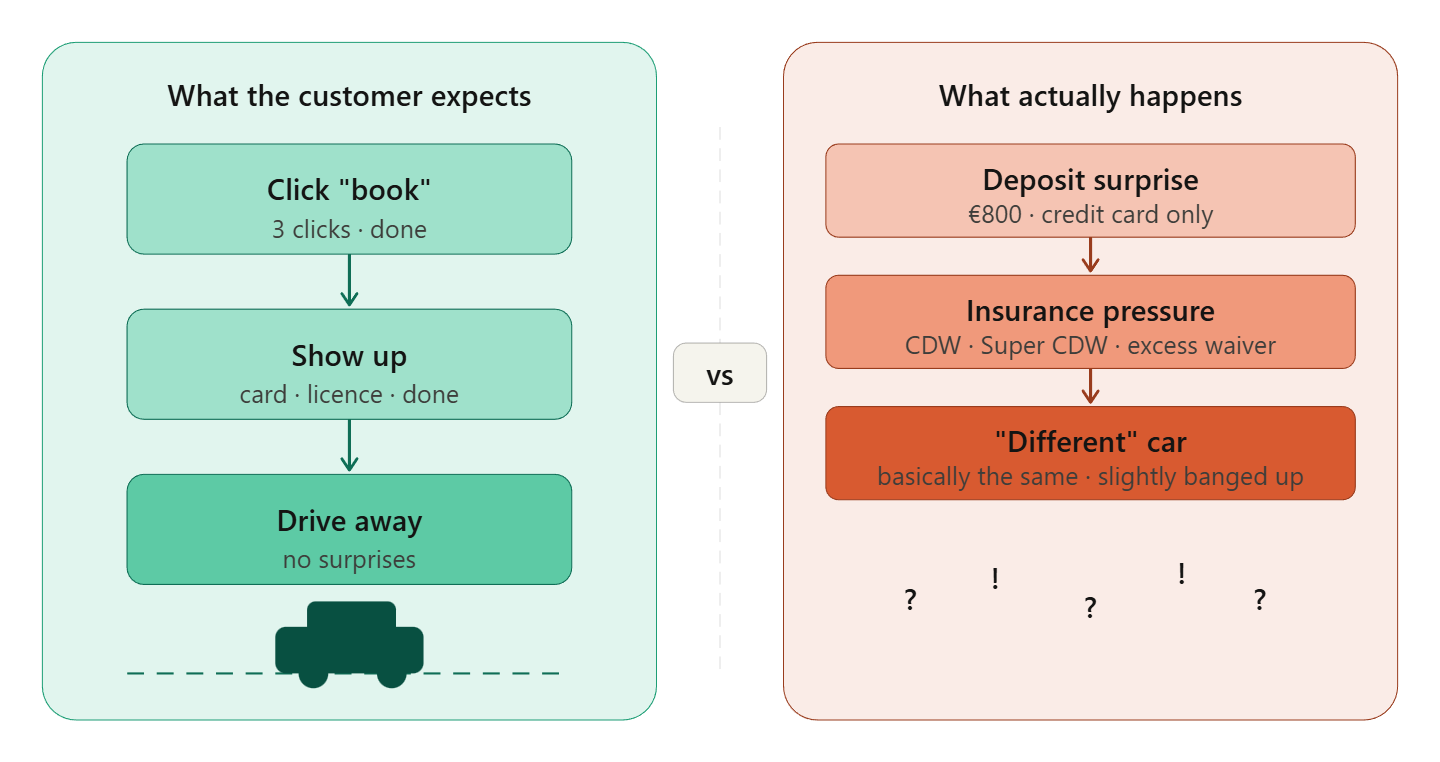
Not because the car is bad. Not because the company acts in bad faith. But because between the moment a customer clicks "book" and the moment they finally drive off the lot, there's an entire obstacle course invisible in the ads but entirely tangible on the ground. A deposit you weren't warned about. Insurance explained while holding your credit card at the terminal. A car that's "basically the same, just different and slightly banged up by rocks."
The industry calls THIS operational reality. The customer calls it something else.
The Service Friction 2026 is an attempt to name THIS more precisely. Not to hand out ratings and rankings, but to show where exactly the customer journey in car rental loses predictability-and why this happens not by accident, but by design.
The Service Friction in Car Rental. Why This Matters Right Now
The Service Friction Index is the industry's first real attempt to measure what everyone knows but prefers not to say aloud. It documents where and why the customer journey in car rental becomes harder, more expensive, and less predictable from first click to key return. It's built on data from millions of bookings on EconomyBookings.com, hundreds of thousands of reviews, and field observations from the hottest spots in the market. This isn't a company ranking or a complaint ledger-it's a diagnosis of a system that's learned to attract customers but is still learning not to disappoint them. And it's the first step toward the industry stopping pretending it doesn't notice the obvious.
The 2026 customer is accustomed to complex things looking simple. Flight ticket in three clicks. Pay with bitcoin. Hotel room in two minutes. Cash no longer required. Taxi in thirty seconds, any class you want, already on the way.
Against this backdrop, car rental looks like a transmission from another era. You book in twenty minutes, then spend an hour reading about CDW, Super CDW, full-to-full, prepaid fuel, tire and glass coverage.
The customer arrives at the counter with a card, a license, and a reasonable list of expectations. These aren't whims. This is the basic contract of modern service:
- Clean car matching the booking
- No queues
- No surprises with the deposit
- No insurance schemes requiring a law degree
- No mysterious charges appearing on the card a week later
Twenty-eight points. For thirty euros a day. Funny? Perhaps. But this list is exactly the market standard the consumer is moving toward. And the gap between it and what the industry considers acceptable is no longer a tourist complaint. It's a structural problem.
We're not a price aggregator. We compare quality. We function as a regulator: we set standards for platform access and remove mechanics that harm the customer.
The problem isn't that the customer "wants too much." The problem is how the industry is structured. Base model: attract with low price, sell insurance at the counter. This isn't an oversight. It's an architectural decision.
The mechanic resembles budget airlines with baggage fees. But in car rental it's sharper. Technically insurance is already included. The customer knows this. This is where the manipulation starts.
Pseudo-budget operators design car pickup so the base insurance psychologically feels insufficient. High deductible, scary stories about scratches, pressure at the counter-everything works toward one goal: sell an extra product to someone who already paid for basic coverage.
In parallel-the logic of fleet utilization at any cost. The company wants to hand over the car fast and sell insurance simultaneously. The customer becomes hostage to this contradiction: pressured and rushed at once.
The first signs of this model appeared before the 2008 crisis. Spain: independent rental companies were buying fleets of tens of thousands of cars. Priority shifted from customer experience to asset utilization. At the same time online booking was growing, where price became the only visible criterion. This is when the pseudo-budget industry took shape. Major players felt the pressure and started copying the same approach.
Behind every system phenomenon there's a concrete cause. This model has one too.
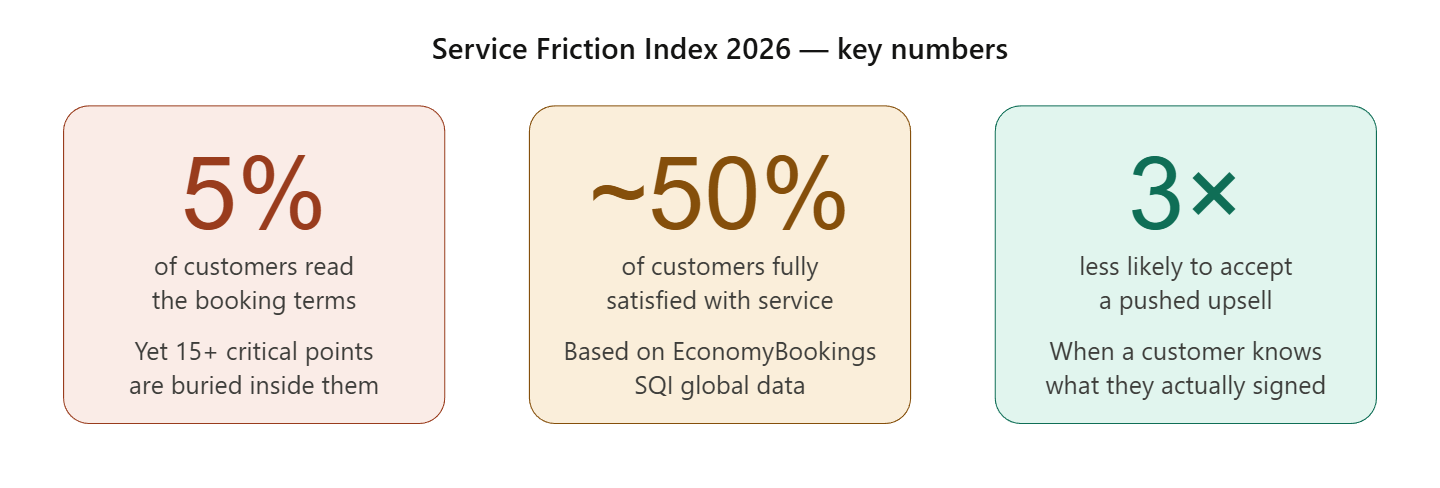
This is where AI becomes a tool in both directions. Pseudo-budget operators are already using algorithms to identify the moment of maximum customer vulnerability and select a script for the agent. This isn't science fiction-it's funnel A/B testing automated to the extreme. But AI works in the other direction too. An informed customer is a customer hard to squeeze. Our AI assistant gives an answer about deductibles, deposits, and actual booking terms before anyone gets to the counter. A customer who knows what they actually signed is three times less likely to accept a pushed upsell. We use AI this way-not to sell, but to remove pressure from the equation.
- Alen Baibekov, Co - CEO EconomyBookings.com / BookingGroup
The Architecture of the Funnel
The shameful model the industry won't call by its real name
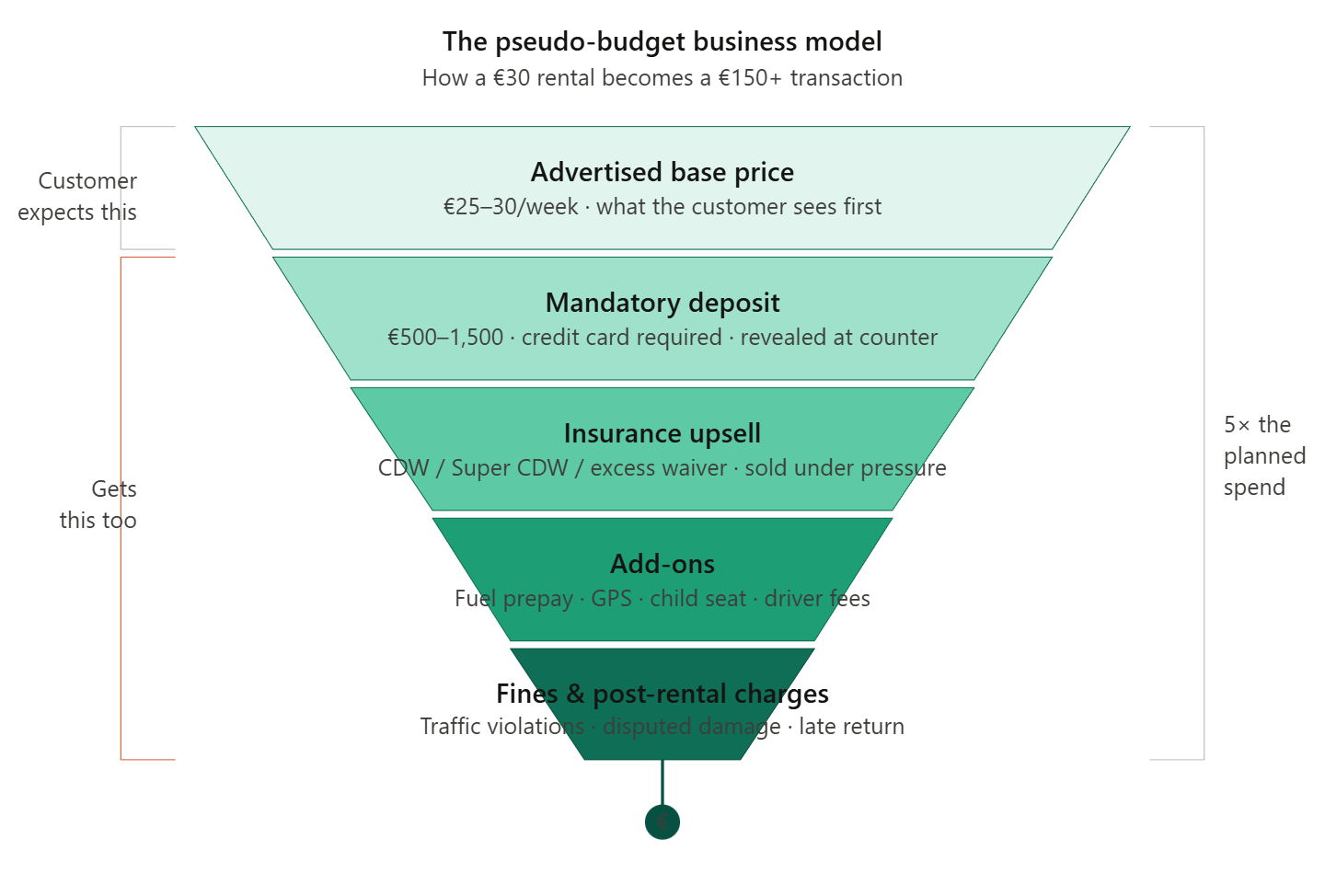
An operator rents a car for 30 euros and sells services for 150. The customer thinks they bought a rental. Actually, they just started the conversation.
This is classic online sales mechanics pushed to absurdity. Everything starts smooth, almost unnoticed, and gradually reaches a point where the car costs ten cents a day and insurance costs fifty euros. The product became an excuse. The real commodity is access to the customer at a moment of vulnerability.
This isn't just a pricing game. It's a deformation that's been running for years and the industry still hasn't named it. According to EconomyBookings.com data, the extremely low base prices haven't gone anywhere-they're still present in the data as an acquisition tool. The model's logic hasn't changed: the lower the entry price, the higher the upsell pressure at the counter.
The funnel is designed so a customer walks in one door, out another, and pays five times what they planned.
In behavioral economics this mechanism is called exploitation of sunk cost and status quo bias. The customer has already invested time, money, and emotion-and that's exactly what makes them maximally compliant.
At ITB in Berlin we spoke directly with key budget segment players. Consensus is beginning to form. This model is gradually exhausting itself. The industry can't change unilaterally-it needs to happen together.
In tourism, customer experience isn't one of the metrics. It is the product. A person should travel the entire path feeling they weren't deceived.
We made a concrete decision, not a declaration of intent. All pseudo-budget operators on our platform are being moved to a specialized product: full insurance coverage only. In parallel we're introducing hard limits on deposit size at pickup. This will eliminate one of the most painful friction points-systematically, at the platform level.
-Igor Demchakov, Co - CEO EconomyBookings.com / BookingGroup
The Main Line of Friction - Getting the Car
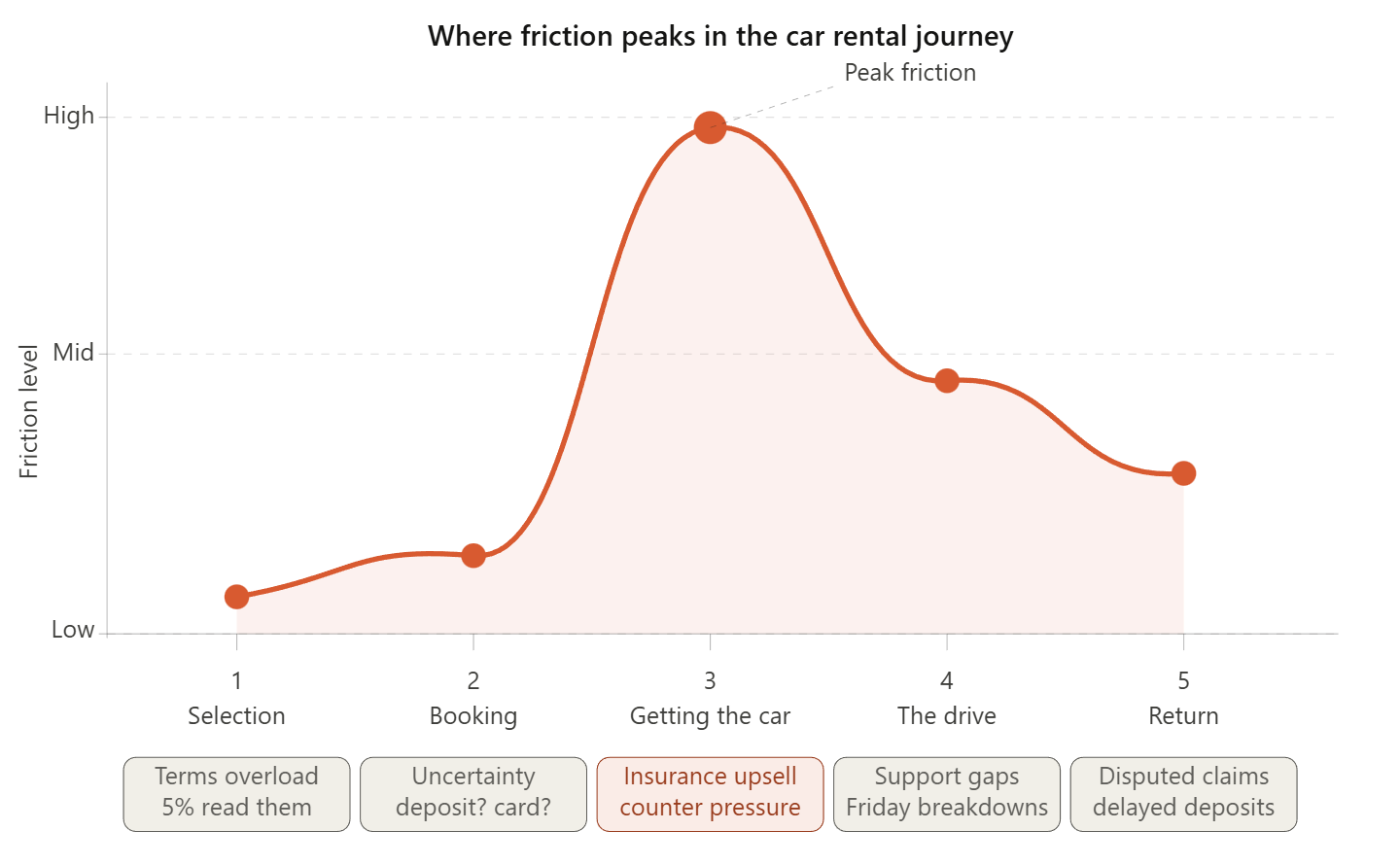
If you look honestly at it, the main line of friction runs through the moment a customer receives their car. This isn't just a stage-it's an obstacle course where patience systematically runs out. That's what led us to measure this friction, mark it as a problem, and shine a light on it ourselves.
Friction isn't just shouting at a counter or an angry review on social media. Friction is the moment when a customer pauses because something is unclear. When they ask a question because the answer wasn't provided beforehand. When they call back because the first conversation resolved nothing.
Each moment on its own looks trivial. Added together, they determine how a customer perceives the entire experience and whether they'll come back.
At the moment of pickup, everything promised during booking-price, terms, insurance, deposit-gets verified right there at the counter in real time. And that's where the gap between expectation and reality most often opens up.
Trust built over weeks from first search to payment can collapse in fifteen minutes at the counter.
A typical scenario: customer books a car for 25 euros a week. Basic insurance with a 1500-euro deductible in the terms. Logical expectation: arrive, leave a deposit, get the keys.
At the location, the rental company starts pressuring: you must buy extra insurance. If the customer refuses, they start looking for reasons to deny the rental. This is one of the most common practices among pseudo-budget operators. It's what generates most of the conflict.
- Alen Baibekov, Co - CEO EconomyBookings.com / BookingGroup
Three Friction Concentration Points at the Counter
First - pickup logistics.
Who operates directly at the airport, who requires a transfer-you need to know this before you land, not after. We show this at the booking stage: filters, location-tagged cards, maps. The voucher includes detailed instructions. After the pandemic, in Miami and Orlando people waited for cars for hours. Staff shortage plus the need to explain terms verbally to everyone-a systemic problem that hasn't gone away.
Second - insurance upsell.
The most painful. The customer thought they understood everything at booking. At the counter, it turns out the terms are "a bit different." Trust breaks here. The first two friction points can improve through technology and process. The third requires something else-a solution at the business model level.
Third - the airport as an amplifier.
High tourist traffic, a concentration of pseudo-budget operators, pressure to fill the fleet. Same company, same rules, completely different experience depending on where and when the customer rents. City offices are usually calmer. The airport sharpens everything.
Five Stages Where the Path Gets Harder
SELECTION · BOOKING · GETTING THE CAR · THE DRIVE · RETURN
Customer experience in car rental rarely collapses at one point. It crumbles gradually-at each turn leaving a bit more doubt than before.
Stage 1 - SELECTION
The main question at this stage: what am I actually choosing?
Terms are written with the care of a corporate contract, not a service for a normal person. Answers exist, but hidden in a way that requires time and desire to find them. On vacation, you don't have much of either. And overall, how well does an average customer understand rental terms before booking?
Five zones of sustained confusion at booking:
- what the insurance covers
- cancellation conditions
- refund timelines and mechanics
- what's included in the price and what isn't
- what documents you need at pickup
This isn't a random list. These are exactly the questions a customer asks at the counter when it's too late to change anything.
Statistics show that fewer than 5% of users open booking terms. Of those who do, maybe 50% actually read them carefully. Meanwhile, standard terms contain over 15 points that are critical to understanding the product. This isn't a problem of inattentive customers. It's a problem of format.
We launched an initiative to simplify. Key parameters now display right on the site-no need to search for anything.
Our team's starting point was the Zappos approach from Delivering Happiness: every interaction with the service should be simple, clear, and leave a feeling of reliability.
-Igor Demchakov, Co - CEO EconomyBookings.com / BookingGroup
At the booking stage, friction levels are minimal. That's the result of deliberate work-not chance.
But tension exists, and it's specific. Dozens of similar offers, no obvious difference between companies, prices that shift several times a day. This isn't an information vacuum-it's information overload. When everything looks the same, choice doesn't get simpler. It paralyzes.
This is where a broker can and should make an impact. Not by imposing solutions, but by removing obstacles that prevent people from deciding for themselves.
Freedom of choice without clarity isn't freedom-it's anxiety. The car rental market gives customers formal freedom: dozens of offers, hundreds of combinations. Without clarity it's a source of stress. Our role is to clear the fog, highlight what matters, give not just options but understanding.
We carry reputational risk for every supplier we feature. If a customer had a bad experience, they blame us. That's not unfair. That's the reality of being a broker. And that's precisely why quality at the selection stage isn't a service question. It's a question of trust in the platform.
- Alen Baibekov, Co - CEO EconomyBookings.com / BookingGroup
Stage 2 - BOOKING
Confirmation received. Certainty, none.
The customer is heading out not knowing: will the car match the picture, will they accept their card for the deposit, what exactly will they sign on arrival.
The nature of tension at this stage is uncertainty. Remove uncertainty and you remove anxiety.
Three tools that work:
- detailed voucher with exact location and step-by-step sequence
- day-before reminder: deposit, card type, documents
- AI assistant available 24/7 answers any question before the trip, no waiting
Together it works like a vaccine against stress. Support requests drop noticeably on pickup day, the customer already knows the answers to questions that usually come up at the counter.
Hundreds of thousands of reviews from the final booking page say the same thing: "clear, simple, easy." Customer satisfied.
Then a different story begins. The moment someone gets to the rental counter, satisfaction drops. Booking on our platform is a calm harbor. Getting the car at the rental company is open ocean.
Our SQI index shows the global picture now: only around 50% of customers are fully satisfied with the service. It's an honest number and we don't hide it.
The gap between regions is enormous. Australia and New Zealand maintain consistently high levels. The US and Latin America are notably lower. Same product, different markets, different results. The problem isn't the product. It's operational culture, corporate ethics, sometimes the mood of the person behind the counter.
- Igor Demchakov, Co - CEO EconomyBookings.com / BookingGroup
Stage 3 - GETTING THE CAR
The main stage. Everything previous and several new uncertainties converge here.
The pickup counter is a bottleneck where deposit, documents, insurance, car condition, and half a dozen other details get sorted simultaneously. With a line behind you. After a long flight. With luggage.
The customer who booked online calmly hears for the first time an 800-euro deposit and that it has to be on a credit card, not debit.
The system wasn't designed differently. All unresolved questions from previous stages flow here and new ones are added.
One of the most common friction points is the bank card. Typical scenario: the booking terms state that debit cards are accepted. Customer arrives and is told they need a credit card.
An experienced customer calls us, we sort it with a direct conversation with the operator. An inexperienced one just agrees to everything to avoid ruining their vacation. In that moment they become deceived-not through ignorance but intentionally. They've already landed, tired, luggage in hand, plans to keep. Psychologically, refusing is nearly impossible. That's exactly the calculation.
Fleet fail-rare but telling. Especially in the US where overbooking in car rental is as normal as in aviation. Customer lands, gets there, stands at the counter-there is no car. Simply no car.
In such a moment we have one job-find a replacement. Fast. Not tomorrow, not in an hour-now, while the person is standing at an empty counter. That's the real test of what it means to be a platform with responsibility, not a window display of offers.
- Alen Baibekov, Co - CEO EconomyBookings.com / BookingGroup
Stage 4 - THE DRIVE
Roadside support isn't a line in a contract. It's an infrastructure requirement.
The customer takes the car not just to get from A to B. They take confidence: if something goes wrong, someone will be there. Without that confidence, there's just keys and hope.
There's a phone number. It's listed. But you'd better call during business hours, not based on customer need logic. Road problems have a reliable habit of happening Friday evening, Sunday, holidays. The customer stands on the roadside in a foreign country and hears an answering machine. The pattern appears in reviews.
Nobody calls support when things are going well. A call is a signal that someone has exhausted internal resources and friction has hit the limit.
Support is trained not so much to solve problems as to correctly explain why it's impossible right now. This isn't malice. It's an operational model where road assistance is a contract line item, not actual infrastructure. And that's almost worse than malice. Because malice can be named and condemned. An operational model just works the way it was designed.
Companies that invest in real roadside support-live operators, specific protocols, authority to make decisions on the spot-get noticeably higher satisfaction. Especially in a crisis moment.
We process hundreds of thousands of bookings a day. Support at that scale inevitably creates queues. A customer in trouble right now can't wait. We solve that contradiction with AI. First response is instant, no hold time. Complex cases go to a professional-quickly and without losing context.
- Igor Demchakov, Co - CEO EconomyBookings.com / BookingGroup
Stage 5 - RETURN
The most underestimated stage. Seems simple: hand over keys and leave.
But this is where disputed scratches appear, unexpected bills come, and the deposit somehow gets delayed.
For ten years tens of thousands of videos have been made about how to return a car correctly. Customers still make mistakes. If the process were transparent, the need for such videos would be minimal.
The first thing many don't think about beforehand-time. You need to refuel, get to the return point, find it, all before the deadline. Being an hour late can mean paying for an extra day.
Second-the car's condition. Heavy soiling can bring additional charges.
Traffic violation fines in most developed countries arrive later, when the customer is already home and thinks the history is closed.
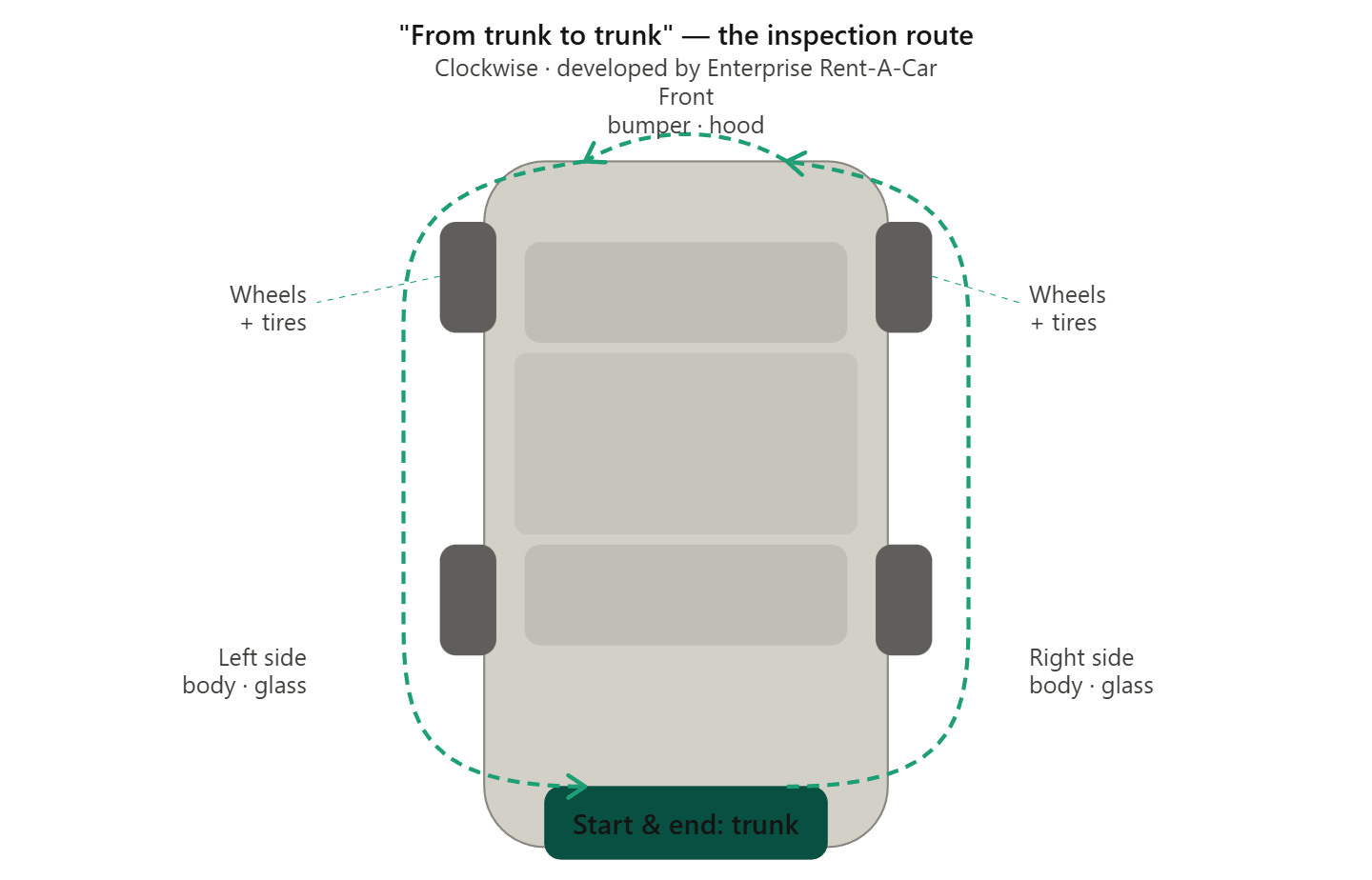
Scratches and damage. There's a proven method called "From Trunk to Trunk," developed by our partner Enterprise Rent-A-Car. The inspection starts at the trunk, then clockwise: body, glass, wheels, tires, back to trunk.
We go further-launching our own inspection service: step-by-step guidance, the same inspection logic, digital documentation saved to our servers. The customer gets proof before the drive starts and after it ends. And no longer stands alone against the rental company in a dispute.
After-hours return-formally convenient: drop the keys in the box and leave. But psychologically it's one of the most uncomfortable moments of the whole rental. No one took the car, no one confirmed everything is fine. The customer leaves with a sense of an open question and it can come back as a claim days later.
That's why we invest in customer education beforehand. The final chord should sound clear, not leave an echo.
- Alen Baibekov, Co - CEO EconomyBookings.com / BookingGroup
How to Demand Quality from Partners
You can't babysit every dissatisfied customer
A partner's operational model affects customer experience. But not the way you'd think. It's not about how the company is structured internally. Everyone has their own know-how, their own structure, their own logic. That's fine. The key isn't the model-it's the culture of customer care and the willingness to work on service continuously, not occasionally.
We can't manually pick apart every bad case. It's like trying to empty the ocean with a spoon. Our job is different-to build a system where good service becomes the norm, not the exception.It starts with one principle: we and the rental company are in the same boat. Not "platform versus supplier." Not "supplier does what it wants." Shared interests, shared reputation, shared customer.The market doesn't forgive weak spots. A company that doesn't systematically work on service will eventually feel it in customer churn, in ratings, in lost positions on the platform. We only travel this road with partners who understand that.The best cases share one thing-not one-off campaigns, but a continuous chain of initiatives. One step, then the next, then another. We've walked this path without stopping for twenty years.
- Igor Demchakov, Co - CEO EconomyBookings.com / BookingGroup
Friction Works Both Ways
The customer is not a passive player in this process
A significant portion of counter friction comes from customers simply not reading the terms. A deposit came as a surprise, even though it was listed at booking. A credit card turned out to be debit when the requirement was stated. An additional driver appeared at the counter even though they should have been added beforehand.
This isn't the customer's fault in a moral sense. It's a systemic communication problem. The terms are written so people don't read them. Or they read but don't grasp why it matters.
A customer who didn't read the fine print isn't a violator. He's a normal person in an era when a ton of text falls on him daily, and his brain learned to filter it all.Our approach is different. Important information should appear on its own at the right moment, in the right format, without needing to hunt for it. Contextual hints at every step, video instructions, an AI assistant that explains any term in plain language. The goal isn't for the customer to know everything. The goal is no surprises at the counter.Special attention goes to cases where users book cars on several platforms at once-sometimes up to five-don't cancel extra bookings, and end up with penalties. We also see situations where customers arrive at the counter in inappropriate states. For example, intoxicated or without a driver's license. But that's a topic for a separate analysis and index.
- Alen Baibekov, Co - CEO EconomyBookings.com / BookingGroup
In Two or Three Years, the Car Rental Customer Became Someone Else. Several Shifts Happened at Once, and Each Rewrites the Rules
The customer became more informed.
He already knows about deposits, excess, the difference between debit and credit cards. Not because he read the terms-because once he didn't and paid for it. Bad experience spreads fast. Today's customer arrives at the counter with a different level of vigilance. This is inconvenient for pseudo-budget carriers and good for everyone else.
Digital behavior became the norm.
Online check-in, mobile booking, one-click payment-these aren't convenient options anymore, they're baseline expectations. A customer used to Uber and Airbnb comes to a rental with the same standards of speed and transparency. And often gets an interface from a decade ago and a forty-minute line.
Trust in the platform matters more than brand loyalty.
The customer doesn't remember the rental company's name-he remembers where he booked. Bad experience? The platform's fault. Good experience? Also the platform. This shifts the entire logic of responsibility in the chain.
The customer started voting with his feet.
The switching threshold dropped. Before, people tolerated inconvenience for price. Not anymore. One bad experience, one opaque extra charge, one counter conflict and he's gone. An unexpected deposit, insurance that "was supposedly included," a scratch on return nobody saw at handoff-one such episode is enough to change the calculus forever.Next time, price isn't the main argument. The main argument is who I trust.
You can attract with price. You can only retain with experience. Car rental isn't a transaction. It's a test. And usually there's no retake.
Systematic Improvement of Customer Experience
How a platform becomes the quality regulator
You can't improve car rental customer experience with one solution. It's not a button and not a UI refresh. It's systemic work across multiple levels at once: platform, partners, processes, data.
A platform that merely aggregates offerings and sends traffic bears no responsibility for what happens at the counter. We chose a different position. We function as a quality regulator: we set standards for platform access, define conditions on which operators can sell, and systematically eliminate practices that harm customers.
We're not observing changes from the sidelines. We're embedding responses into the product.On the platform right now you can do online check-in in advance: complete the prep steps before the counter, reduce friction at handoff.We're developing vehicle condition documentation. The customer can document the car before and after the trip. Everything gets saved to our servers. This isn't convenience-it's protection.We analyze NPS and related metrics daily. This isn't reacting to complaints after the fact-it's the foundation for product decisions before a problem becomes normal.Since late 2025 we've integrated AI assistants that help customers pick the right car for their needs and catch important details. Not a chatbot for checkbox purposes-this is real cognitive load reduction.Payment became seamless: Apple Pay, Google Pay, modern processing.But the most important thing is what happens outside our offices. Our team regularly visits rental companies, conducts on-site process audits, and works with partners to build service improvement plans. This isn't email exchanges. This is real work with operational reality.Service quality grows, customer experience stabilizes. The direction is set and we're not veering off.And one last thing. We don't do self-promotion. One loud negative review always sounds louder than a hundred silent "thank yous." It's the law of perception and we accept it. But there's another level of assessment-relationships. How the world's strongest rental companies choose to work with us because in twenty years we earned it. Not in personal self-promotion but where decisions are made seriously. That's our real north star.
- Alen Baibekov, Co - CEO EconomyBookings.com / BookingGroup
How Much Does It Cost? Depends on When You Ask
When the algorithm decides for the customer
Processing and aggregating millions of data points, we can say with confidence: price is today the most unpredictable element in the industry.
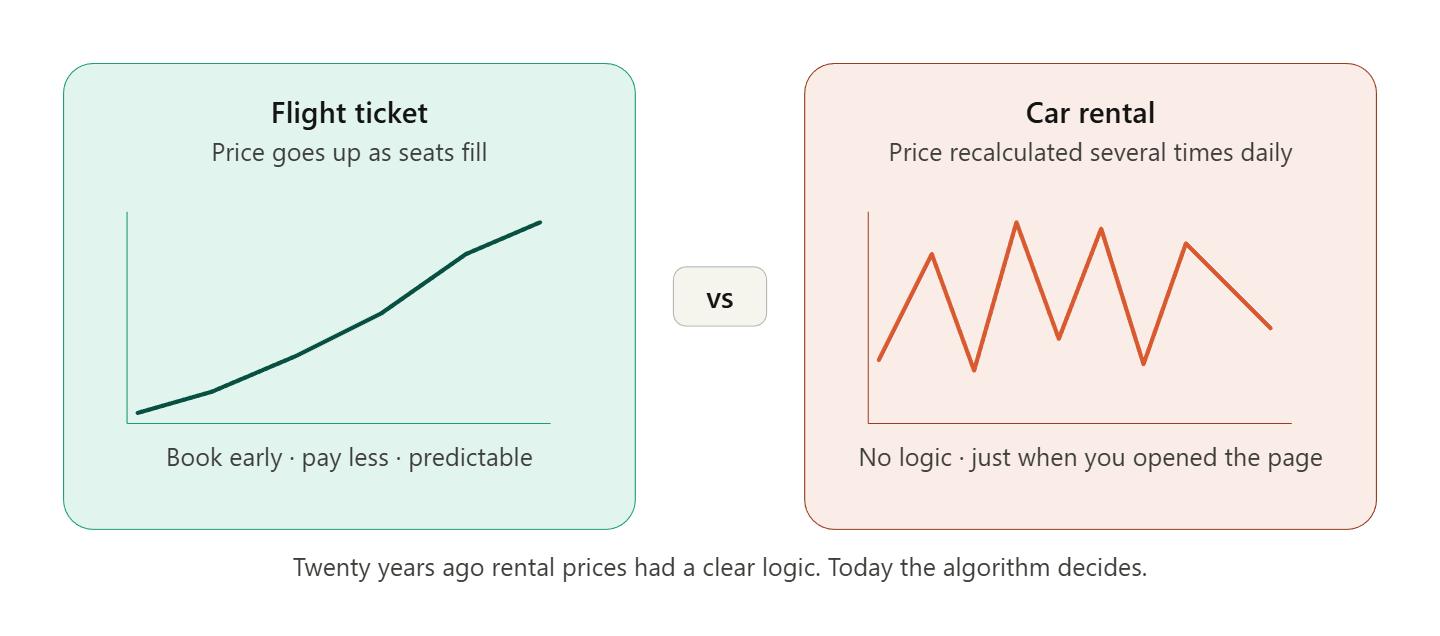
Twenty years ago rental prices were relatively stable. Seasonal markups, clear logic, predictable range. Today they're dynamic arrays recalculated several times a day.
The price spread for the same car in the same location over a week can hit two to three times without any product change. Rational trip budget planning became nearly impossible. The booking moment is now determined not by logic but by luck.
Same car category, same dates, but price can be $300, $700, or drop to minimum under a fleet-fill promotion. Not because the product changed-just the algorithm made a different call.This makes price simultaneously the largest and least controllable factor: for the customer who doesn't know when to book, and for business that struggles to build strategy around such volatility.
- Vitaly Cvetkov - Head of Growth
Three Things You Can't Simulate
Predictability · Transparency · Maturity
Predictability
This is when the customer doesn't get surprised. Neither pleasantly nor unpleasantly. He just gets exactly what he expected.
The car class he booked. The deposit amount that was listed. A line no longer than fifteen minutes. A final bill with nothing that wasn't there at booking.
Sounds simple. It's achieved only through standardizing every step-from first click to key return. It's not an inspiring story. It's hard operational work. But that's the real product.
Transparency
This isn't about price. It's about trust.
The customer doesn't demand free. He demands clear. When terms aren't obvious-the customer has to ask. Each question is a small signal of distrust. A few of those in a row and the rental starts feeling like a game where the rules change as you play.
The market picture is telling:
- Up to 60–70% of support contacts are clarifications about terms, deposits, insurance
- Every third rental scenario requires an extra contact to clarify details
- Up to 40% of negative experiences form at one stage-vehicle handoff
- Where terms are presented clearly and upfront, support contacts drop to 40%
The customer doesn't demand perfect service. He demands predictable. Perfect is unattainable. Predictable is a choice a company makes consciously.
We stopped treating rental terms as formal paperwork long ago. They're part of the product. If a customer gets to the handoff counter and only then learns about a deposit or card restrictions-the product failed. Not the lawyer, not the manager, not the rental company. The product.
- Alen Baibekov, Co - CEO EconomyBookings.com / BookingGroup
Maturity
Shows not in response speed. In the ability to close an issue on first contact-especially when the customer is vulnerable.
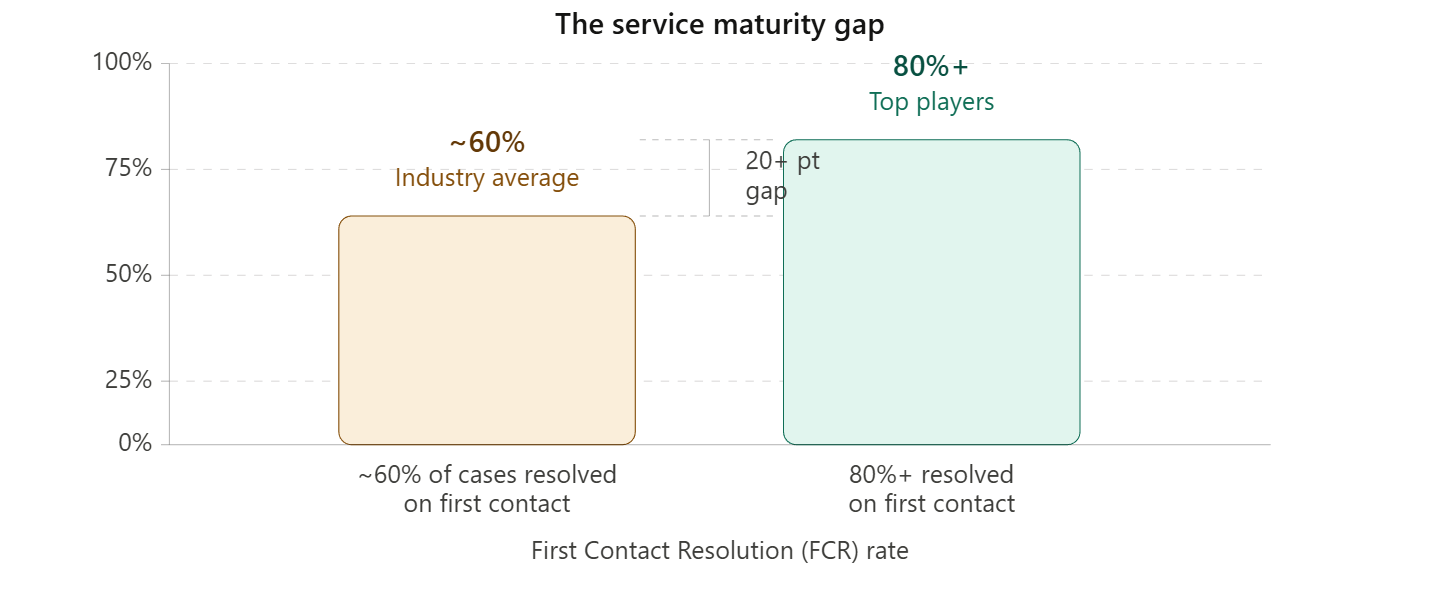
FCR, First Contact Resolution-one of the key metrics we track. Across the industry the issue is resolved on first contact about 60% of the time. Top players hit above 80%. A 20-point gap isn't a nuance. It's a chasm.Company maturity isn't defined by the absence of problems. It's defined by what happens when problems occur.We handle up to a million bookings a year. Over a decade-tens of millions of customers from different countries through thousands of rental companies. That's experience you can't buy or fake.Each complaint is a signal. A trigger for the question: what in the system needs to change so this doesn't happen again? Not patch the hole. Change the system.Real business maturity doesn't live in a flawless façade. It lives in the ability to learn from mistakes faster than they accumulate.
- Igor Demchakov, Co - CEO EconomyBookings.com / BookingGroup
Price Opens the Door. Service Decides If It Ever Closes
In car rental too many variables exist. Season, length, location, car class, card type. All affect experience and all fluctuate.
Behind every booking is enormous work. Months of decisions the customer never sees. Then it all meets one person at a counter.
He doesn't know how long the customer spent choosing this city, this car. He sees the next person in line. He has a script, an upsell target, and the exhaustion of eight-hour shift.
At that moment the counter operator becomes the judge of the entire customer experience. Not the platform, not the algorithm, not a pretty website. A living person in a specific moment and he decides what the final impression will be.
Large international operators typically deliver predictable experience: standardized processes, trained staff, clear insurance logic. Pseudo-budget carriers-different story. Higher chance of pressure, bigger gap between what's promised online and what happens at the counter.We track friction in real time and see it spike sharply during peak weeks in Miami, Málaga, Cancun. These are exactly the periods to prep the customer in advance.The credit card requirement for deposit still screens out significant customer volume. We actively work with partners to expand accepted payment methods. Card type should not determine experience quality.
- Michael Kiselov - Head of North American Partnership with Suppliers
What We Do and What We Expect from Partners
Quality customer experience in car rental is never the result of one side's work. It's a chain and it's only as strong as its weakest link.
A platform can make booking perfect. But if the counter greeting is pressure, opaque terms, and a tired agent, everything before gets erased in three minutes.
The market already knows the answers. It just applies them unevenly.Digital check-in before car pickup-the customer arrives prepared, not discovering rental terms for the first time at the counter. Clear communication the night before-a deposit reminder, documents, insurance options. Counter staff who explain instead of sell. Insurance logic you can understand without a legal dictionary.AI assistant is one of the notable shifts lately. A system that understands the question and gives a concrete answer: about deposit, insurance, specific booking conditions. The customer doesn't wait for office hours or hold on line.Transparent final settlement. No mysterious charges after return. Details right there on the spot or in an email within an hour.None of these are revolution except AI. They all exist in aviation, hospitality, carsharing. Traditional rental adopts them slowly and unevenly. That gap is exactly the space for those ready to move faster.
- Michael Kiselov - Head of North American Partnership with Suppliers
The Simple Rule of EconomyBookings.com / BookingGroup
An apology without action isn't an apology. It's a polite way to do nothing.
"We're sorry it worked out this way"-nobody wants to hear that standing on the roadside or having lost a vacation day. People want to hear something else: exactly what happened, what will be done right now, and that it won't repeat. A refund, compensation, priority support on the next rental. Concrete and fast. That's all that works.
A customer who hit a problem and got a quick honest fix often becomes more loyal than someone whose trip went smooth. A well-handled crisis builds trust deeper than a flawless rental. Sounds counterintuitive but it's the truth of life and numbers both.
There are companies that are good to work with. First type: strong service culture, every employee knows the standard and has the authority to deliver it. Not a script but understanding.Second type: operators who invested early in digital infrastructure and now reap the fruit of decisions made three to five years ago.Third type: niche players with honest positioning, no hidden upsells, transparent deposits.All three share one thing. They stopped competing on price long ago. They compete on experience. That's a completely different game.
- Alen Baibekov, Co - CEO EconomyBookings.com / BookingGroup
Looking at 2027 - Where Competition Heads
Price will remain a factor. But it will stop being the main argument for customers who once chose predictability and won't go back.
Strong players in coming years will be set apart not by fleet size or aggressive pricing but by the ability to make experience predictable.Good rental isn't a good car. It's predictable experience start to finish. Most rental problems don't come from the machine. They come from people.The line between strong and weak players is drawn in culture. Copying someone else's best practices is technically easy. Truly changing service means transplanting a different tree with different roots. Very hard and very long.If we look two to three years ahead, the main battle will be on the digital customer journey. From search to key return. Whoever makes that seamless-online booking, mobile check-in, digital inspection on return-gets sustainable advantage that's hard to catch. AI is already changing support economics. The window isn't infinite.As a platform we made this choice consciously. That's why we're moving pseudo-budget carriers to a specialized product. It's not a popular move with some partners. But it's right.You can cut price with a board decision. You can't eliminate friction. Friction lives in processes, in people, in habits, in corporate culture. You can't slice it off with one top-down call. It's years of work.That's why low price is a market entry barrier, nothing more. Service quality is what truly holds a person and makes him come back.
- Alen Baibekov, Co - CEO EconomyBookings.com / BookingGroup
We foresee a market split into two camps. Those who built process and those who just undercut. This split is already happening. On one side operators investing in service and getting a loyal audience hard to poach with price. On the other-companies competing on discount alone, steadily building reputation debt. There is no middle anymore-the choice is which direction to go.
Methodology
The Service Friction is built on platform data spanning 2022–2025. The analysis includes aggregated booking data, customer reviews, NPS and SQI metrics across key markets: USA, Europe, Latin America, Australia and New Zealand. Geographic coverage spans over 20,000 locations, including the largest airport hubs.
EconomyBookings.com connects travelers with more than 600 verified rental companies worldwide. Over the platform's lifetime, more than 10 million customers have passed through, processing up to a million bookings annually. One of the industry's largest proprietary datasets on car rental service quality.
Findings reflect systemic market patterns and are not a ranking of individual operators or brands.
The approach is grounded in principles described in Tony Hsieh's "Delivering Happiness": "Every customer touchpoint should get better. Not because it's trendy. Because it's the only way that works over time."
About the Research Team
This material was prepared by the research and analytics team at EconomyBookings.com / BookingGroup based on 18 years of operational experience in car rental.
Alen Baibekov - Co-CEO & Co-Founder, BookingGroup
Strategic vision, industry analysis and expert commentary on market dynamics and competitive landscape.
Igor Demchakov - Co-CEO & Co-Founder, BookingGroup
Strategic vision, industry analysis and expert commentary on market dynamics and competitive landscape.
Michael Kiselov - Head of North American Partnership with Suppliers
Service quality challenges, supplier relationships and operational friction in key North American markets.
Vitaly Cvetkov - Head of Growth
Growth strategy and market expansion.
Almaza Pirha - Blogger, CEO & Founder Baltics Cloude
Interviews, customer feedback analysis and service testing.
FAQ
Service Friction - what is it and why does it matter now?
The car rental industry has spent decades optimizing customer acquisition and has largely ignored what happens after the "book now" click. The Service Friction is the first systematic attempt to measure where and why the customer journey becomes harder, more expensive and less predictable. Not a company ranking. A system diagnosis. It matters now because the customer has changed-more informed, less tolerant of surprises, quicker to vote with their feet. The industry hasn't fully grasped this yet.
What is funnel architecture and why does the industry refuse to call it by name?
A low price at booking isn't an offer. It's an invitation into a funnel. The operator rents a car for 30 euros and sells services for 150. The customer thinks they bought a rental. They actually bought the beginning of a conversation. Real monetization happens at the counter, when someone has already landed, is exhausted and physically cannot refuse the car. This isn't pricing randomness. It's a business model designed around a moment of human vulnerability. The industry knows this. And stays silent.
Why is getting the car the primary tension point?
Everything promised at booking is verified at the counter. Here is where expectation meets reality and where the gap most often appears. Pressure to buy extra insurance. Unexpected deposits. Forty-minute queues. An agent with an upsell target. Our data shows one thing consistently: satisfaction after booking stays high and drops sharply after pickup. Trust built over weeks collapses in fifteen minutes.
Where exactly does the journey become harder at each of the five stages?
Choice: information overload. Dozens of similar offers, unclear differences between rental companies, algorithmic pricing that changes several times daily. Booking: a fine-print trap. Fewer than 5% of customers read terms; 15 critical points remain invisible until the counter. Pickup: peak friction. Insurance pressure, queues, disputed inspections. Driving: support on a schedule. The phone exists but works when the customer doesn't need it. Return: an open question. No one accepts the car. Keys are in a box. A claim can arrive a week later.
How do you ensure partner quality when you can't personally stand behind every unhappy customer?
You can't, if you act case by case. Only systemically. Partner quality doesn't start with control. It starts with being in the same boat. Companies that understand that platform reputation is their reputation work differently. We conduct field audits, build joint improvement plans, set platform access standards and remove operators who systematically damage customer experience. The market doesn't forgive weak links in the chain. We only move forward with those who get it.
Friction works both ways. What does that mean?
The customer is not a passive participant. They arrive with expectations, sometimes unrealistic. They don't read terms and are surprised by deposits. They book through five platforms simultaneously hunting for the lowest price, then wonder why the service is what it is and where the penalty came from. But this doesn't absolve the industry of responsibility. If the system is built so the customer is doomed to surprises, that's not their problem. It's an architectural decision someone made on purpose.
How does a platform become a quality regulator instead of just a storefront?
A platform that plays middleman bears reputational risk for every rental company it lists. If a customer gets a bad experience, the platform is guilty in their eyes. That's not unfair-it's reality. We move pseudo-budget operators to full coverage products with capped deposits, we develop digital vehicle inspection, we analyze NPS and SQI daily. This isn't marketing. It's a regulatory position. The difference between a platform that channels traffic and one that takes responsibility for the outcome.
Why has car rental pricing become unpredictable and what can you do about it?
Algorithmic pricing recalculates cost several times daily. The same car in the same location can cost 300 or 700 dollars within one week with zero product changes. Rational budget planning has become nearly impossible. The moment you book is now determined not by logic but by luck. One piece of advice: don't wait for the perfect price. It doesn't exist. Book when the price seems reasonable and choose a platform that shows full cost before payment, not after.
Three things that cannot be simulated. What are they?
Predictability, transparency and maturity. Predictability means the customer gets exactly what they expected: the same car, same deposit, same final bill. Transparency means important conditions are visible before booking, not discovered at the counter. Maturity means a company responds to system errors with systemic change, not apologies. All three can be declared in five minutes. Building them takes years. The customer feels the difference instantly.
At what point does price stop working as an argument?
After the first bad experience. A customer who once faced an unexpected deposit, opaque insurance or a disputed scratch at return chooses differently next time. Price opens the door. Service decides whether it ever closes. You attract customers with price. You keep them with experience. The industry still invests in the first and economizes on the second.
EconomyBookings.com / BookingGroup's simple rule - what is it?
We're not a price aggregator. We compare quality. Every supplier on our platform passes through standards we set, not the market. If an operator systematically harms customers, they leave the platform. If a customer hits a problem, we don't hide behind "that's between you and the rental company." We bear reputational risk for every booking. And that's not a burden. It's a choice.
An apology without action. Why is that worse than silence?
Because it creates an illusion of resolution where none exists. "We're sorry that happened"-no one wants to hear that standing on the roadside or having lost a vacation day. People want to hear something different: exactly what went wrong, what will be done right now and that it won't happen again. Refunds. Compensation. Process change. Concrete and fast. A customer who got a quick, honest solution often becomes more loyal than one who had no problems at all. A well-handled crisis builds trust stronger than a flawless drive.
Where is competition heading in 2027?
The main battlefield is the digital customer journey from first search to key return. Winners will be those who make it seamless: online check-in, mobile inspection, instant support without queues. AI is already reshaping the economics of service and this is just the beginning. The market is polarizing: companies investing in experience pull away. Those betting on price dumps accumulate reputational debt. There's no middle ground anymore. And the customer who once got a seamless experience won't go back to queues and fine print.

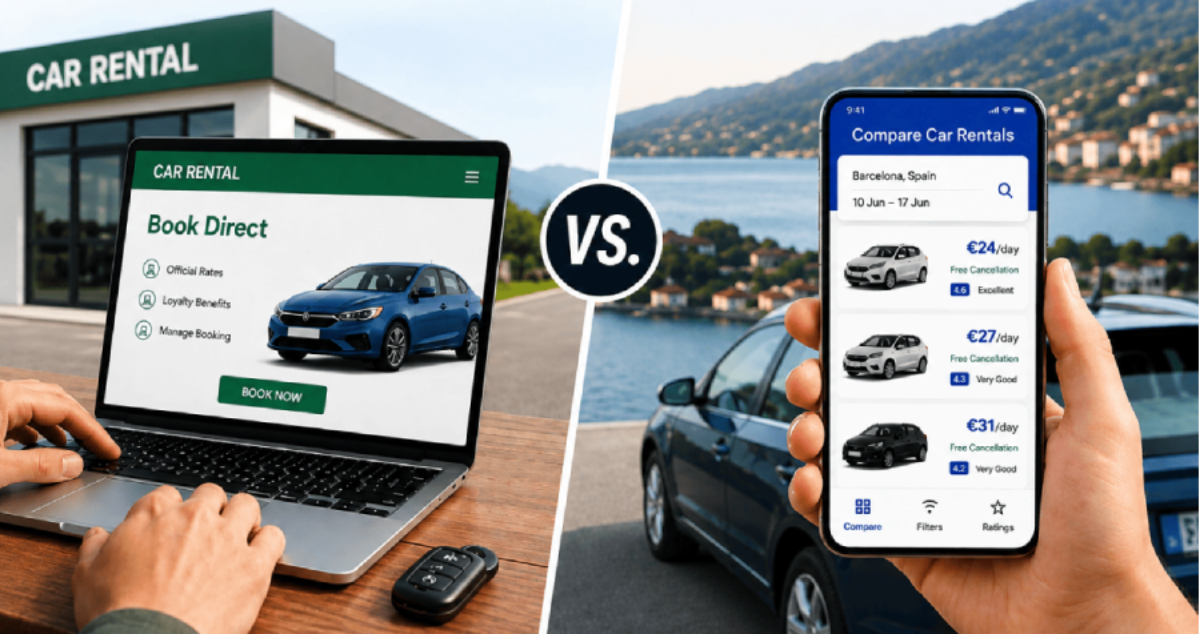




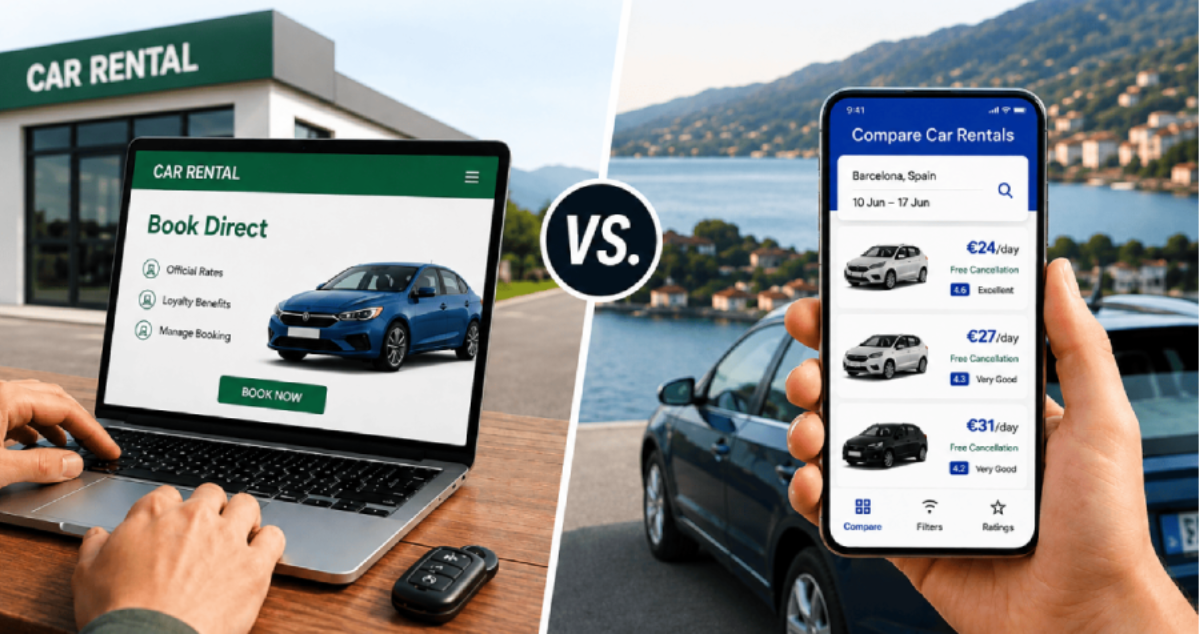
Find and compare cheap car rental deals




Get the AppBook faster with EconomyBookings
- All trips in one place
- Instant confirmation
- App-only deals