- Home
- South America
- Mexico
- Guadalajara
Cheap Car Rental in Guadalajara

- Secured payment guarantee
- 10+ million clients
- Multi-language support
- Booking of any class cars
- 600 providers worldwide
Your quick travel guide to Guadalajara
Overview Drive on
 Average price
 Cheapest price
 Most popular car type
 Best month to book
 Top rated supplier
Language
ES
Currency
MXN
Drive onRight Side
Average price€29.60 per day
Cheapest price€6.52 per day
Most popular car typeFullSize
Best month to bookApril
Top rated supplierMex Rent a Car
Tips for renting a cheap car in Guadalajara
Are you seeking a cheap car rental in Guadalajara? With Economybookings, you can easily compare multiple providers to find the best possible deal in Guadalajara. With so much to experience in the city and across the larger region, a quick comparison can save you time and money on a car that will help you reach it all.
Compare pickup locations – Select the broader urban area instead of a specific location to unlock more deal options, including off-airport savings.
Slightly adjust pickup times and dates – Even changing your booking by an hour can reveal lower rates.
Choose economy or compact cars – If you’re planning a longer road trip into the mountains or to the coast, a vehicle with four-wheel drive can come in handy. Otherwise, a compact car will likely meet all your needs in Guadalajara.
Book early – Guadalajara tends to serve as a worthy year-round destination, but rental demand spikes even higher during popular travel times like winter dry season, major holidays like Christmas and Semana Santa (or Easter/Holy Week), and large events like cultural festivals and corporate conventions. Booking in advance helps secure lower prices and better vehicle selection.
Tips When Renting and Driving a Car in Guadalajara
Rent a car if you plan to visit places outside the city, where mass transit options may be limited.
Avoid rush hour traffic on Federal Highways 15, 44, 70, and 80, the Anillo Periférico Manuel Gómez Morin beltway, and major arterial roads in the city.
You can pick up your car at major airports like Guadalajara International (GDL), and at various storefronts around the city.
Choose a small car for better mileage and easier parking around the city.
Pick a car with four-wheel drive for longer drives into rural mountain and coastal areas.
Inspect the car and take photos before and after rental.
Driving Tips in Guadalajara
Drive on the right side of the road, and prepare to wait your turn when you need to turn left.
Look out for stop lights—green means go, yellow signals that you must stop, and red means full stop. At most intersections with stop lights, there will also be dedicated stop lights for left-turn lanes.
Glorietas, or Guadalajara’s version of roundabouts, can be found around town, and they’re beloved as historic landmarks… But not so much as traffic calming devices. Prepare to go with the flow and stay alert while navigating them.
Though foreign embassies often recommend against driving at night anywhere in Mexico, it’s usually safe to drive at night if you’re taking the autopistas (or toll roads) to Puerto Vallarta and the Riviera Nayarit. But for other road trips that involve more of the free federal highways and smaller backcountry roads, it’s best to do those during daylight hours.
Horn use should be reserved for emergencies or warnings.
Traffic usually moves faster in the left lanes on highways.
Expect to pay anywhere from MXN 25 to 60 per hour (or about USD$1-4) for parking at secure lots. At various lots around town, you can use the Telpark app for contactless payment. (Look for the Telpark logo at the entrance.)
Guadalajara has several options for refueling your car, but keep in mind that all Mexican gas stations are full-service, and it’s usually a good idea to tip your attendant should they provide additional assistance (such as checking your tires and cleaning your windshield).
Keep your driver’s license, rental papers, proof of valid passport/entry, and proof of insurance with you at all times.
Like other major North American cities, Guadalajara has its own Anillo Periférico Manuel Gómez Morin beltway ringing around the city. From there, Federal Highway 80 and the 80D autopista lead east to San Luis Potosi, Highway 80 also goes west to the Colima border at the Pacific coast, Highways 70 and 544 head west to Puerto Vallarta, Highways 44 and 23 go south to Chapala and Ajijic, and Highway 15 and the 15D toll road go through Guadalajara between Mexico City (to the south east) and Mazatlán (to the north west).
Expect heavy traffic during weekday rush hours (6:00 to 9:30 AM, and 5:30 to 8:00 PM).
Speed Limits
In Mexico, speed limits are typically 10 km/h (6 mph) in residential neighbourhoods and parking lots, 60 km/h (37 mph) on city streets with no posted speed limits, 60-80 km/h (37-50 mph) on major urban arterial roads, 70-90 km/h (43-56 mph) on two-lane rural highways, 90-100 km/h (56-62 mph) on urban highways, and 110 km/h (68 mph) on major highways without lower posted speed limits. Also note that Mexican authorities enforce any speeding detected above 130 km/h (81 mph), so resist any urge to drive super fast on the highway. Always watch for posted signs, as limits can vary.
Road Signs
Mexican road signs are typically noticeable and well-placed, though it’s important to note that Guadalajara has a vast network of roads and not quite as many signs. Keep in mind that on streets with signs, speed limit signs are in kilometres per hour (km/h), as Mexico uses the metric system. Throughout Guadalajara and surrounding areas, look out for signs marking dedicated rail crossings, bus lanes, bike lanes, and school lanes, which may have special speed limits and other restrictions.
Tolls, Fees, and Restrictions
Over time, Mexico has developed an extensive network of autopistas, or toll roads. Heading out of (and into) the city are Federal Highway 15 D going east to Mexico City and west to Mazatlán, Highways 70D and 200 D going west to Puerto Vallarta, and Highway 80D going north east to San Luis Potosi.
Mexico’s toll roads accept several payment options, though it’s important to note that credit and debit cards are only accepted via electronic transponders. As of late 2025, IAVE provides authorised devices to use on the autopistas. Otherwise, plan to pay in MXN cash. (Cash in foreign currencies will not be accepted!)
Wherever you begin your Guadalajara trip, check with your rental car agency in advance to see if they provide an IAVE or another authorised transponder, and ask about their autopista coverage policies.
Discover Guadalajara and Jalisco by Car
If you intend to primarily stay in the city and not venture farther than inner ring suburbs, you can pull off a car-free trip in Guadalajara. But if you’re thinking about exploring more of Mexico beyond the metro region, a car can really help you get where you want to go. With a rental car, you won’t have to worry about limited rail service and pricey Uber and Lyft rides.
A car offers flexibility and freedom to discover hidden spots that are much harder to reach via public transportation in Mexico. This especially rings true in this country, from the illustrious beaches of Puerto Vallarta to the many tasty treasures of Tequila.
When to Visit
With so much to see and do in and around Guadalajara, the best time to visit largely depends on where you want to go and what you want to do. If you’re planning to spend plenty of time outdoors, the spring season (March-May) tends to bring the mildest and driest weather. Meanwhile, for major events and festivities (like Fiestas de Octubre, Día de los Muertos, and the Christmas festivals), the autumn months (September-December) work great. If you’re hunting for bargains, summer (June-August) is usually the low season with the lowest prices (since this season also brings the most rain).
For the best road trip weather, you may want to consider a spring trip, as you will likely run into less rain and mild temperatures during this season. Whenever you plan to hit the open road, make sure to pack water and sunscreen, and to check weather forecasts before leaving.
Languages & Communication
Spanish is spoken nearly everywhere in and around Guadalajara. With that said, this is a very multicultural city, so you may also hear indigenous languages like Huichol, Náhuatl, Purépecha, and Mixtec in certain areas, and you will also likely run into familiar foreign languages like English, German, Greek, Chinese, and Japanese. Most signage is in Spanish, though visitors rarely face language barriers when wandering around the city’s central neighbourhoods.
In some areas outside the city, such as the expat-heavy Lake Chapala region and the touristy coastal towns like Puerto Vallarta and Sayulita, you may run into even larger shares of locals speaking English. But if you’re planning to venture out to less touristy areas, it will help to learn some Spanish.
Currency & Payments
Like most other interior regions in Mexico, the Mexican peso (MXN, or Mex$) is used everywhere around here. While U.S. dollars are accepted more often in cities like Tijuana and Ciudad Juárez near the U.S. border, Guadalajara tends to stick to the peso.
If you prefer not to deal with paper currency, rest assured that credit cards and debit cards are widely accepted in Guadalajara, and that contactless payments are becoming increasingly common at gas stations, hotels, restaurants, and stores. ATMs are readily available throughout the region, making it easy to withdraw cash if needed, and you’re probably safest using ATMs inside bank branches and lobbies.
Top Driving Routes in and Around Guadalajara
Even if you’re not planning to stay in the city for long, Guadalajara itself is worth spending some quality time to explore its central neighborhoods like Centro Histórico, Colonia Americana, and Zapopan, and to experience its many grand landmarks like the Catedral de Guadalajara, the Museo de Arte Huichol, the Museo de Arte de Zapopan, and the Instituto Cultural de Cabañas
Tlaquepaque – About 30-70 minutes south of central Guadalajara; this funky and trendy artists’ village is not only fun for souvenir and gift shopping (expect everything from pottery to papier-mâché), but also unique street performances and snazzy restaurants
Bosque La Primavera – Around 30-70 minutes west of central Guadalajara; spanning some 30,500 hectares, this biosphere reserve is perfect for escaping the concrete jungle and exploring a real forest that’s also a prime riparian habitat (as in, come here for great birdwatching!)
Zona Arqueológica Teuchitlán o Guachimontones – About 1-2 hours west of central Guadalajara; first developed by the Teuchitlán indigenous people around 300 BCE, these ancient and nearly perfect concentric circle structures are truly awesome wonders to behold
Ajijic – Around 1.5-3 hours south; come for the refreshing vibes of Lake Chapala and pleasant year-round weather, and stay to wander the cobblestone streets, discover boutiques and mercados full of unique artisan goods, and enjoy some incredible international cuisine
Tequila – Around 1-2 hours west; select a designated driver and head out to the town so legendary that it has its own signature liquor made from the agave plant, and stick around to learn how tequila is made, which tequila-based cocktails you can make beside margaritas, and which foods pair best with which tequilas
Puerto Vallarta – About 3.5-6 hours west; this might be a touristy beach town, yet it’s also a town that retains its authentic Jalisco spirit quite well with its charming historic neighbourhoods, and it’s one of Mexico’s most welcoming destinations for LGBTQ+ travellers
Punta Mita and Sayulita – About 3-5.5 hours west; the Riviera Nayarit may have something for everyone, whether you’re a picky traveller seeking a top-tier luxury beach resort in Punta Mita, or someone craving a more laid-back beach trip to cool expat-friendly towns like Sayulita and Lo de Marcos
In recent years, there’s been a lot of talk about matters of crime and safety throughout Mexico. While some areas (like the southern reaches of Jalisco) still struggle with heightened amounts of cartel violence, Guadalajara is generally safe for travellers, especially in central neighbourhoods like Colonia Americana and Zapopan. And in areas like Puerto Vallarta and the Riviera Nayarit that draw many foreign tourists, local authorities tend to go the extra distance to ensure visitors feel safe.
Still, you can be proactive about your safety by taking basic precautions, such as researching where you want to go in advance and storing your valuables in a secure location at your hotel or vacation rental. If you run into any security concerns, contact your home country’s embassy for guidance and assistance.
Experience the top locations with car rental in Guadalajara
Guadalajara Airport
6.1
Opening hours
24h x 7
Address
Av. de la Solidaridad Iberoamericana 7973, Guadalajara, 45690
Documents on pick-up
Credit Card
Take your credit card in the main driver`s name with a limit large enough to cover the excessPassport
Take your passportDriving License
Take your local and international driving licenseAll car rental in Guadalajara

Discover the cheapest car rental in Guadalajara
* Disclaimer: Prices and availability shown may not reflect today’s rates.





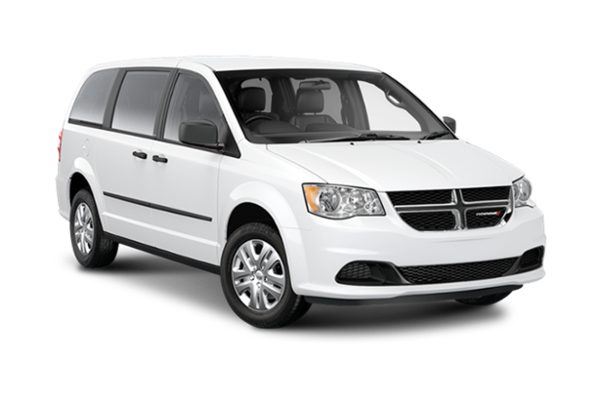


Car rental companies in Guadalajara
We have prepared a shortlist of top rental companies in Guadalajara. To save both time and money compare offers on EconomyBookings.com to find the best deal.
America Car Rental
 6.1 / 92 reviews
Available in 1 location

Time it took to drop your car off8.3
Cleanliness of the car6.4
Overall condition of the car6.6
Time it took to pick your car up6.2
From € 3.01 per day
*Mex Rent a Car
6.7 / 86 reviewsAvailable in 2 locations

Time it took to drop your car off8.7
Cleanliness of the car6.7
Overall condition of the car6.5
Time it took to pick your car up6.4
From € 3.01 per day
*Explore Our Wide Range of Popular Car Types
Find exclusive special offers on popular car types and Save Big with EconomyBookings!
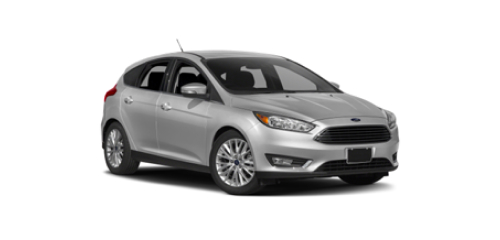
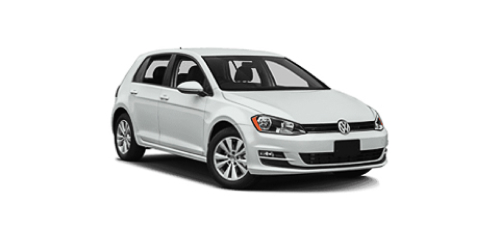
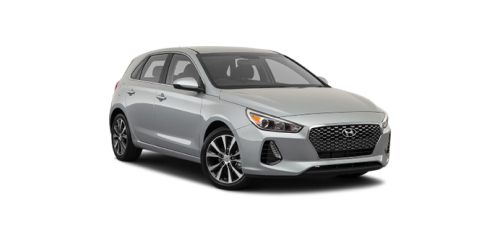
* Disclaimer: Prices displayed may not reflect today's rates.


Subscribe to our newsletter
Sign up and stay updated on our special offers and best deals.
By signing up you agree to EconomyBookings Privacy Policy


Get the AppBook faster with EconomyBookings
- App-only deals
- All trips in one place
- Instant confirmation