Travel guide


Travel guide
Car rental deposits explained: How they work, how to get the deposit back and how to avoid one
6 min read·02 Jul 2026 14:48·Author: Alex VoronovTable of contents 

If you have never rented a car before, the deposit is usually the part that catches you off guard. You have already paid for the rental, you are standing at the counter, and suddenly there is talk of blocking a few hundred, sometimes a few thousand on your card. It can feel like a surprise charge. In most cases, it is not. Here is what a deposit actually is, so nothing at the desk throws you.
What a car rental deposit is and why it exists
A deposit is a security amount the rental company blocks on your card when you collect the vehicle. It usually consists of the insurance excess plus the cost of a full tank of fuel (and, in some countries, VAT). It is not an extra fee - in most cases you never actually pay it.
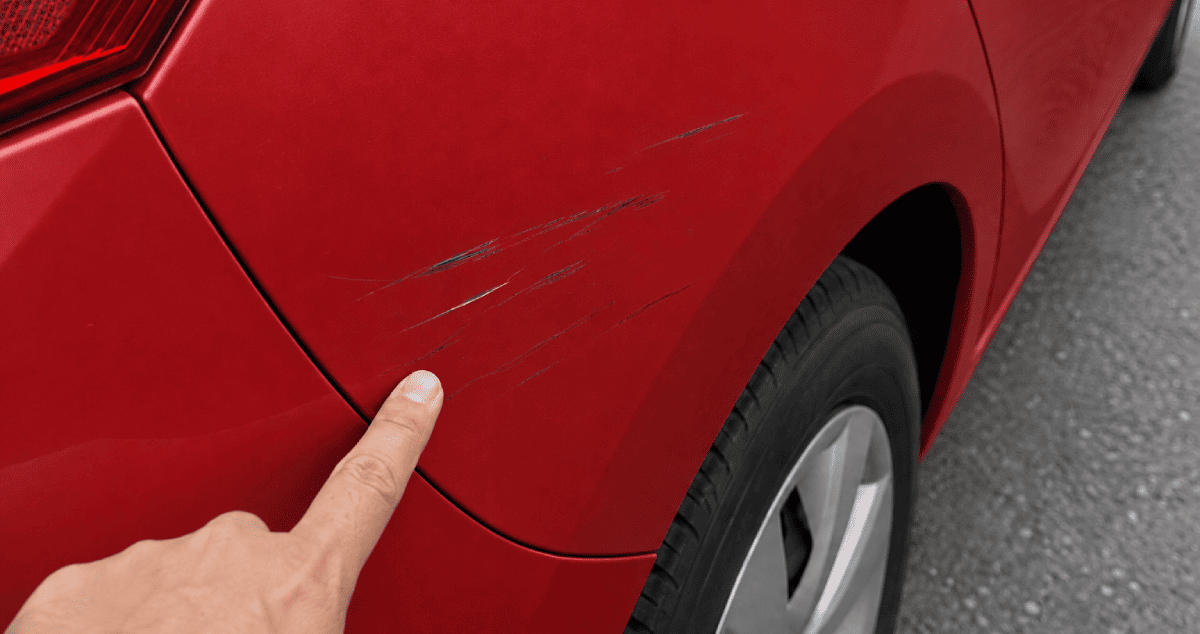
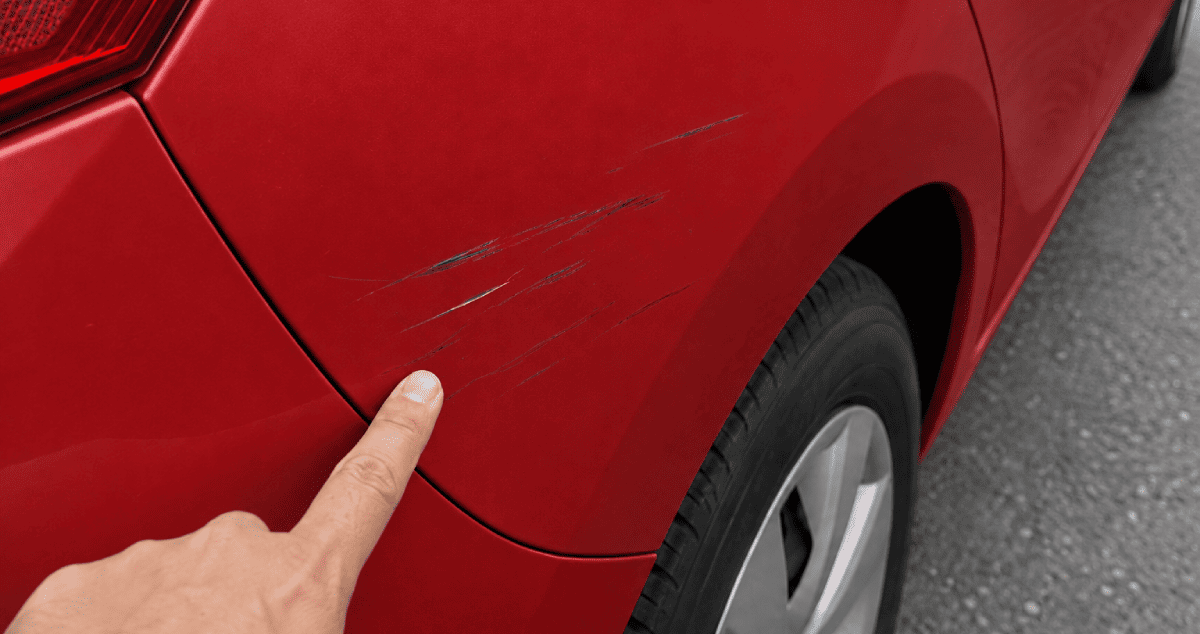
The logic behind it is simple. The company is handing a stranger a very expensive object, and it won’t know until the car comes back whether there is a fresh scratch, a half-empty tank, or a toll still to settle. The deposit is its safety net for the costs that can only be added up after the rental:
-
damage to the vehicle, up to the excess (deductible);
-
theft of the vehicle, up to the theft excess;
-
a refuelling charge if the car comes back with less fuel than agreed;
-
tolls, traffic fines, or administrative fees;
-
cleaning or smoking penalties.
If none of these apply, which is the usual outcome - the full deposit is released back to you.
Who actually holds it?
The deposit itself is taken and held by the rental company at the counter, it sets the amount, blocks the funds, and processes the release. Car rental platforms like EconomyBookings is a booking agent that connects you with car rental companies and doesn’t hold the deposits. Because every supplier writes its own terms, the exact deposit and rules are shown in the rental conditions for the car you choose, so it is always worth reading them before you book.
Hold vs. charge: what actually happens to the money
This is where most of the worry comes from. You see the amount leave your available balance and assume you have been charged. You haven’t - not yet, and usually not at all. The deposit is an authorization hold, not a payment.
Authorization hold (the deposit)
Money is reserved on your credit card but not spent. Your available limit drops, and the funds free up again once the hold is released.
Charge
Money is actually taken - for example the rental cost, or an excess deduction if the car comes back damaged.
So when the deposit is blocked, you have not been charged for damage - the amount is simply frozen until the car is returned and checked. One practical note: where a supplier does accept a debit card, the hold comes out of your real account balance rather than a credit limit, which is a big part of why a credit card is the standard requirement.
Which card you need
The rental company needs a physical credit card in the main driver’s name, with enough available funds/credit to cover the deposit. You can pay for the booking online with a debit card, but a credit card has to be presented at the counter and this trips up more travellers than almost anything else, so it is worth sorting before you fly.
-
Why it has to be a credit card. It lets the company place a hold, offers stronger fraud protection, and gives them a reliable way to settle damage or extra charges after you have driven off. That is the whole reason it is the standard.
-
Cards generally not accepted for the deposit: debit, prepaid, virtual, Visa Electron, Maestro, and similar. If you are not sure what you are holding, check the card type before you travel.
-
Enough available credit/funds matters. If the card does not have enough available credit for the deposit, the company can refuse to release the car. Treat the deposit as credit you cannot touch for the length of the rental.
-
Luxury and high-value cars. These carry much higher deposits, and for the largest amounts some suppliers ask for the deposit to be split across two credit cards in the main driver’s name. Check the specific supplier’s conditions.
How much the deposit is
There is no universal number, and the spread is genuinely wide. Rent an economy car from a major company and the most common hold might be around $200. Decline the local insurance on a rental in Mexico, and you could see $2,000 or more blocked on your card, not because anything is wrong, but because Mexican law requires liability cover that a foreign credit card usually won’t provide, so the supplier offsets that risk with a much bigger hold. In short, the vehicle, the country, and the insurance you choose move the number far more than the daily rate does.
As a rough guide:
-
economy and compact cars sit at the lower end;
-
SUVs, vans, and premium cars are higher;
-
luxury and exotic cars are the highest, and can reach several thousand euros.
The exact deposit for your car is shown in the rental conditions before you book, so you are never guessing at the counter.
Can you rent a car without a deposit?
Yes, it is possible. While most car rental companies still require a security deposit, no deposit car rentals have become more common in recent years. Many smaller local suppliers now offer rentals with no deposit as a way to stand out from larger competitors, while some international brands also provide no-deposit options on selected vehicles or destinations. However, it is still not the industry standard, so availability depends on the supplier, location, and vehicle.
If you're wondering how to avoid a deposit on a rental car or find the lowest deposit rental car, then using a car rental comparison platform is your best choice. Not all comparison platforms let users filter by deposit amount or no deposit. For example, Rentalcars.com and Expedia currently don't offer a No Deposit filter.
| Platform | Deposit Amount Filter | No Deposit Filter |
| EconomyBookings | ✅ | ✅ |
| Rentalcars.com | ✅ | ❌ |
| Expedia | ❌ | ❌ |
| Kayak | ❌ | ❌ |
At EconomyBookings, you can compare suppliers by their deposit requirements using the Deposit filter, making it easy to find the option that best fits your budget. If you'd rather not leave a security deposit at all, simply select the No Deposit filter to see which car rentals don’t require a deposit. It gives you complete transparency before you book, so you can avoid unexpected deposit requirements at pickup.
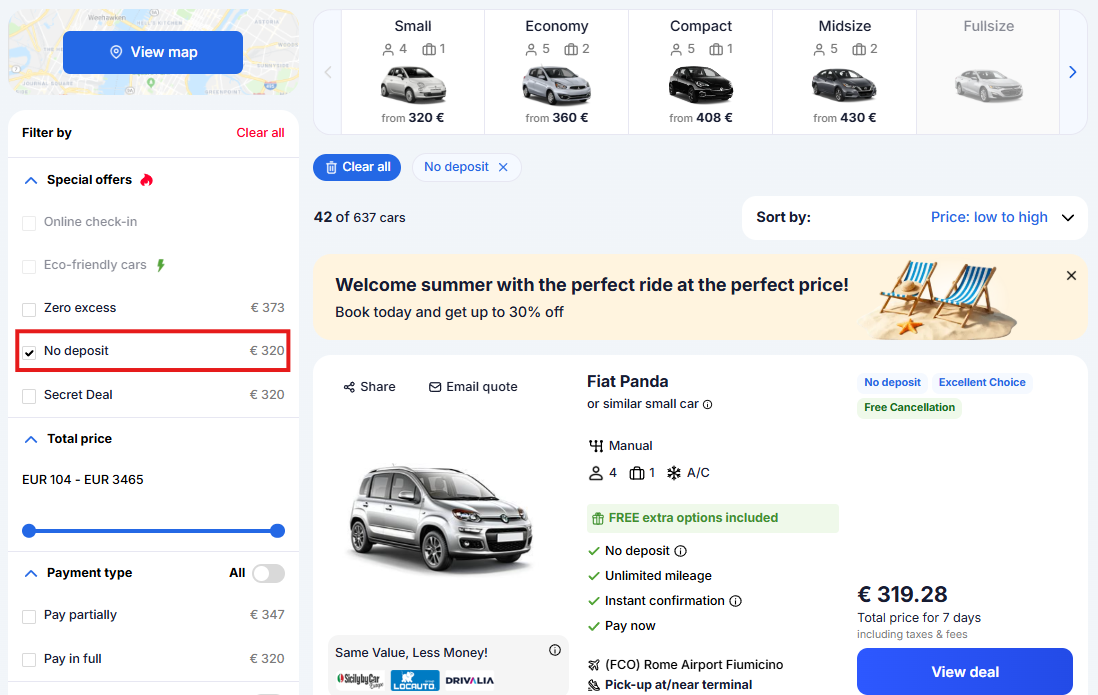
Whatever you choose, always read the Rental Conditions before booking. They explain the exact deposit amount, accepted payment cards, and any conditions that apply to no-deposit rentals for your selected vehicle.
How the excess works if there is damage
If the car does come back damaged, the company withholds the excess from your deposit, and your cover handles the rest. Say your damage excess is €300 and the repair comes to €1,000: you pay the €300, and a Collision Damage Waiver (CDW) covers the remaining €700. Whatever part of the deposit isn’t used comes back to you.
You can shrink or remove that excess with extra cover. One thing worth understanding: EconomyBookings Full Coverage is a reimbursement product - you still leave the full deposit at the counter, and if there is damage, you claim the eligible costs back afterwards by filing a Full Coverage claim through EconomyBookings. A supplier’s own zero-excess product (such as SCDW), bought at the desk, may remove the deposit instead.
When and how the deposit comes back
Getting the deposit back is usually uneventful, but the timing can test your patience. Once you return the car and it passes inspection, the supplier releases the hold, typically within about seven working days for an undamaged return. How quickly it then shows up in your account is down to your bank, and that can add a few more days.
-
If the hold hasn’t cleared in the expected time, start with your bank - the release is processed by the supplier and your card issuer, not by EconomyBookings.
-
Keep your return receipt showing the car went back in good condition, just in case a question comes up later.
How to avoid deposit problems
-
Bring a credit card in the main driver’s name with available funds comfortably above the deposit.
-
Check the deposit amount and accepted card types before you travel - both are in the rental conditions.
-
Photograph the car at pickup and return, including any existing damage, and confirm the fuel level.
-
Get the return inspection documented and keep your receipt.
-
Give it a few working days for the hold to clear before contacting your bank.





Find and compare cheap car rental deals





Get the AppBook faster with EconomyBookings
- All trips in one place
- Instant confirmation
- App-only deals