Travel guide

Travel guide
Everything Americans Need to Know About Renting a Car in Europe
10 min read·03 Oct 2025 14:21·Author: Andrew DaveyTable of contents 

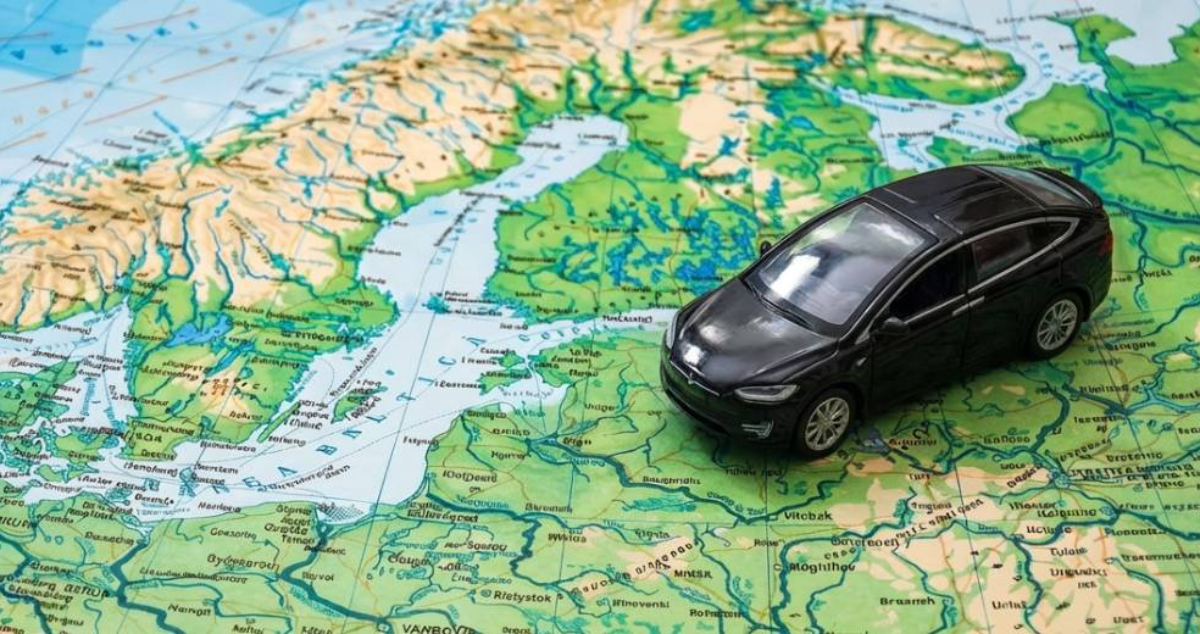
Traditionally, American travelers have ventured to Europe for the bright lights and famous finds of its major cities: the artistic excellence of Paris, the saintly treasures of Rome, the ancient wisdom of Athens, and the captivating beauty of Barcelona. Yet beyond Europe’s most famous (and tourist-heavy) cities, there’s a much larger continent full of majestic mountains, pleasant beaches, historic towns, and scenic countryside. Though Europe does have an extensive rail network that makes it easier to reach more places car-free, a car can very much help in reaching more places beyond the most popular city centers.
While there are many similarities between renting a car in Europe and North America, there are also some key differences worth noting. To help you understand how the roads function and what to expect across the continent, here’s a quick primer on all you need to know about renting a car in Europe.
Why rent a car in Europe?
A few European nations, such as Switzerland and Germany, make it easy to reach many destinations by train. But even in these countries, you will likely need to adapt your plans to their train schedules. And if you’re hoping to go off the most beaten paths and explore lesser-known corners of Europe, having your own car can make for an easier journey, as well as one you can do on your own schedule.
What to remember while driving in Europe
- Unlike the United States (US) and the United Kingdom (UK), continental European nations (and Ireland) operate completely on the metric system, so distances are displayed in kilometres (km) on road signs.
- Like the US, European signs often feature pictograms to indicate things like pedestrian crossings, roundabouts, construction zones, and nearby amenities (when driving on the highway).
- Manual transmissions are common, with automatics costing more or being less available.
- Insurance requirements vary by country, and drivers may need extra coverage.
- An International Driving Permit (IDP) is always recommended and often required for visitors to drive in European Union (EU) member states.
- European cities are more likely to have narrow streets and limited parking, especially in historic city centers.
- A growing number of European cities, including popular destinations like Paris, Amsterdam, Copenhagen, and Barcelona, have low-emission or congestion zones that charge taxes and/or impose driving restrictions in select areas.
What is required to rent in Europe as an American?
Essential documents
- Valid US driver’s license with easily legible English text.
- Passport for identity verification.
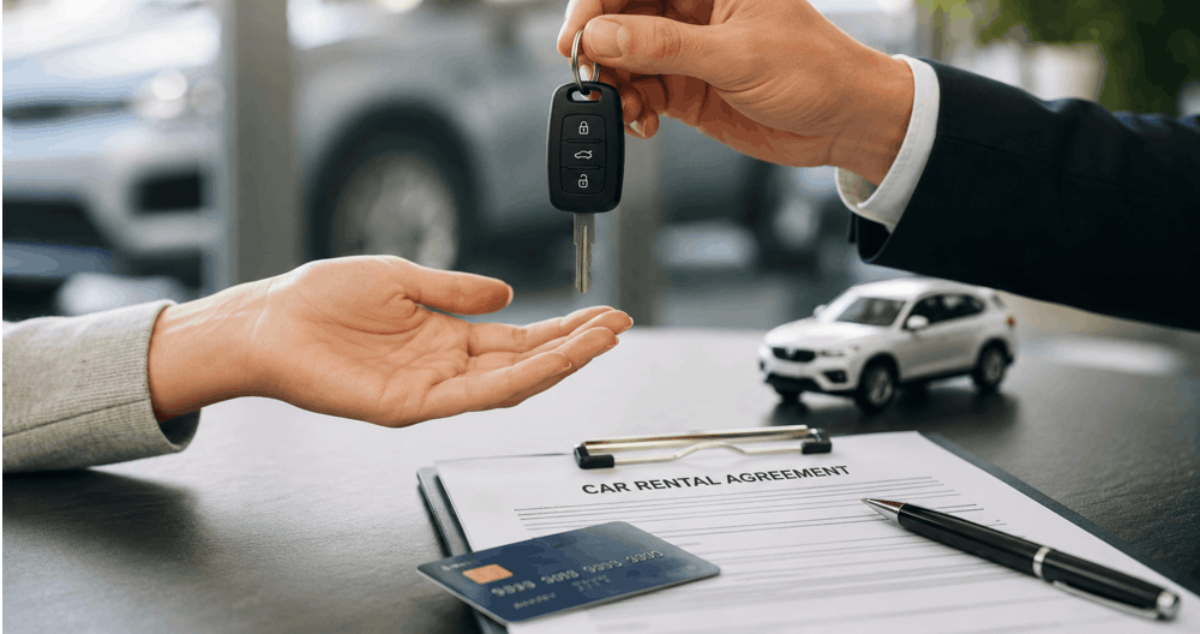
- Credit card in the driver’s name for security deposit and payment: Some companies may accept a debit card, but generally they prefer or require a credit card.
International driving permit (IDP)
An IDP is commonly required for travellers from outside of Europe who plan on driving in Europe. If you’re based in the US, the State Department authorizes the American Automobile Association (AAA) to issue IDPs.
Other requirements
- Expect to see bills and charges in local currencies, not the US dollar. Most European Union (EU) member states, including popular destinations like Spain, France, and Ireland, use the euro (€). Beyond the Eurozone, Switzerland and Liechtenstein use the Swiss franc (CHF), the UK uses the British pound (£), the Nordic countries use their own respective currencies, and many Eastern European countries use their own respective currencies.
- The minimum age to rent a car usually ranges from 21-25, depending on which country you rent your car in and which car rental company you use. In some cases, a rental company may impose a young driver surcharge of €15 to €25 per day.
- Beyond baseline insurance with standard liability coverage, car rental companies typically offer additional collision damage waiver (CDW) or loss damage waiver (LDW) coverage for non European residents. Even if your US-based credit card offers some liability coverage abroad, it may not be valid in some European nations (such as Ireland and Italy).
- Keep in mind that your rental company may charge extra fees for things like dropping your car off in a different location (one-way fee), driving extra long distances (limited kilometres), allowing someone else to drive the rental car (additional driver fee), and driving your car into another country (cross-border fee). In addition, you will likely face various taxes, such as the standard VAT (or national sales tax) and local taxes.
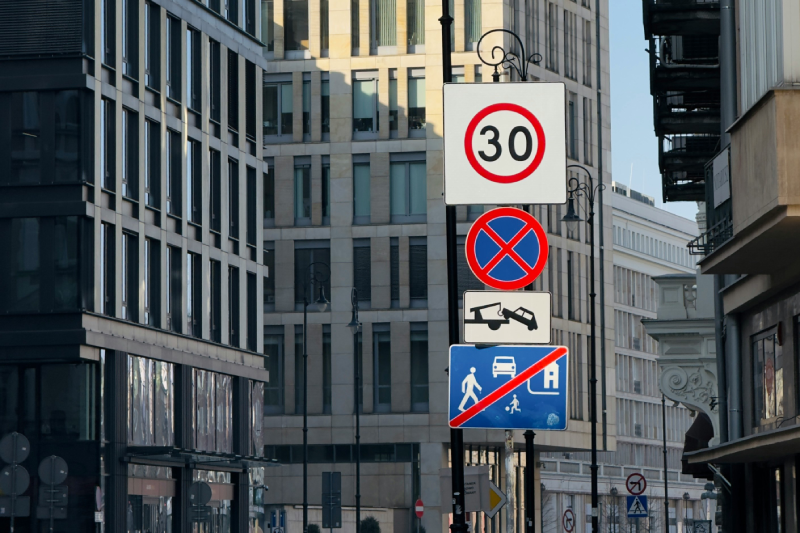
Common Differences Between US and European Driving Laws
- Metric system: Speed limits and distances are posted in kilometres, not miles. Keep in mind that 1 mile = 1.61 kilometres, so a 20 mph speed limit is equivalent to a 32 km/h speed limit.
- Roundabouts: While some US municipalities have experimented with roundabouts in recent years, they’re much more commonplace throughout Europe, with traffic priority usually given to vehicles already inside.
- Right of way: Rules can vary—at some unmarked intersections, vehicles coming from the right have priority.
- Traffic cameras: Expect strict enforcement for speeding, red lights, and low-emission zones, often with automatic fines.
- Drunk driving laws: While most US states forbid driving when blood alcohol content (BAC) by volume exceeds 0.05-0.08%, European laws tend to forbid driving when BAC exceeds 0.05%. In some countries, such as Denmark and Czechia, penalties may be imposed if any BAC is detected.
- Headlights: Daytime running lights or low beams may be required at all times in some countries, including Italy, Switzerland, and the Nordic countries.
Tolls and vignettes: Many highways require electronic tolls or prepaid stickers (vignettes) rather than pay-as-you-go booths. Always ask your car rental company in advance about toll road coverage. In some cases, you may have to handle tolls yourself, or your rental company may impose a surcharge for toll road use.
What to know about ETIAS (and ETA)
Are ETIAS required? Not as of today. After several years of developing and fine-tuning, the European Union is set to launch its new ETIAS system in late 2026. Basically, foreign visitors (including those from the US) will need to register in advance and pay €20 (or just under USD$24) to streamline entry authorisation upon arrival. Though this change will make the process a little more time-consuming and costly on the front end, it will ultimately lead to an easier experience, as authorisation will last up to three years on an ETIAS-approved passport (though the Schengen zone’s 90 day limit on short stays still applies).
If you’ve been to the UK lately, this may sound familiar, as the UK already has its own ETA system in place for England, Scotland, Wales, and Northern Ireland. Here, expect to pay £16 (or just under USD$22) and register in advance for authorisation that will automatically be linked to your passport. The process almost always takes less than 72 hours to obtain approval. And once you’re approved, you will be authorised to enter the UK for up to two years (provided you stay under the six-month short stay limit).
Keep in mind that ETIAS implementation has already been postponed several times, so stay updated as 2026 approaches, especially if you plan to travel at the end of the year or beyond.
European cross border travelling
Since the vast majority of the European Union operates under the Schengen zone (also referred to as the Schengen Area), you probably won’t have to worry about running into highly patrolled border crossings within Europe. In addition, non-EU nations like Switzerland and Norway participate in the Schengen zone, meaning they have no militarised borders with any EU member states. And since Ireland and the UK have their own Common Travel Area, there are no checkpoints between these two countries.
Always consult your car rental company before finalising any plans to drive across international borders, especially if you plan to drive outside the Schengen zone. While some companies still allow customers to drive between the UK and France, others may impose restrictions, and additional surcharges may apply. (See above.) Even within the Schengen zone, some companies forbid driving a rental car into Eastern Europe if the rental originates in a Western European nation like France or the Netherlands. And typically, European rental car companies forbid customers from taking their cars to Russia, North Africa, or the Middle East.
European driving culture
Country-by-Country Nuances
Since Europe is a big continent, expect some key differences while driving across national borders, even if those borders have no manned checkpoints. Just as various parts of the US, Canada, and Mexico have their own distinct local driving cultures, the same applies in Europe. Perhaps the most famous example is Germany, where many sections of autobahn (or highway) have no official speed limit, but drivers are nonetheless expected to adhere to basic rules like always using the rightmost lane available and signaling your exit at least 300 metres before your desired off-ramp.
Another interesting example is Switzerland, where road signs switch languages among German, French, and Italian, depending on which is the primary language of the local canton. And in Italy, they have their own autostrade (or toll roads) that still operate with printed tickets, and they require you to activate a Telepass account and install the device in advance before using any Telepass express lanes at Italian toll booths. (Otherwise, you will have to pay autostrade tolls with cash or a credit card.)
A very common complaint among tourists is reckless driving on the roads. Certain countries (like Italy (especially in Naples), Latvia, Austria, Greece, and Portugal) have developed a reputation for higher amounts of accidents, distracted driving citations, and drunk driving citations. With that said, it’s worth noting that even those countries have lower traffic fatality rates than the United States, so it’s very doable to stay safe while driving in Europe. Just try to stay cautious and aware of your surroundings, and you should be fine.
Right vs. left side driving
Though we’ve been noting the various differences between driving in Europe and driving in the US, here’s one major similarity: driving on the right side of the road. Throughout continental Europe, including non-EU nations like Norway and Switzerland, drivers navigate the roads on the right side. In addition, cars tend to have their steering wheels on the left side inside, just as they do in the US, Canada, and Mexico.
With all that said, there are a few key exceptions, and they’re all island nations. More specifically, the UK, Ireland, Cyprus, and Malta drive on the left side of the road. Also, note that cars have their steering wheels on the right side in these nations. If you're an American driving there for the first time, take a few minutes to adjust in a quiet area, be especially mindful at roundabouts and intersections, and try to stay centered in your lane. Most drivers adapt quickly, especially with an automatic car and a bit of extra focus in the first hour or two.
Helpful Tips for a Smooth Trip
Booking & Planning
- Reserve early to guarantee availability of the car you want, and to protect yourself from peak season delays and chaos. (Summer tends to be a very busy travel season throughout Europe, and winter means ski season in the Alps.)
- Compare rental insurance with your credit card benefits.
- Get the right car type for your destination. Some cities might have tight parking spaces, so it’s better to go for a compact car. Even in less developed areas like the Swiss Alps and the South of France, a smaller car is usually better for navigating the narrow and winding mountain roads.
- To get the best deal, simply search for your desired pick up location and dates.
Picking up the car
- The primary driver and additional drivers (if there are any) must be present with the required documents, such as driver’s licence, credit card, and IDP.
- For any additional questions, you can consult with your rental car company at your designated pick-up location.
Navigation & Safety
- Google Maps and Waze work well for navigation in most European countries.
- If you intend to drive into any rural areas with poor or no internet connection, download your maps in advance, or consider renting a car with built-in GPS navigation.
- In case of any emergency, 112 is the equivalent number for the US and Canadian 911 in all European countries.
- Call the supplier or our support line directly if anything goes wrong during your trip.
Final Checklist Before You Go
- Confirm license, IDP, and insurance documents.
- Read all the terms and conditions, as it helps to familiarise yourself with all the specific information.
- Review the country-specific road rules for your route.
- Double-check fuel policy and deposit conditions.
- Bookmark our Help Center page and feel free to reach out if we can assist further in connecting you with the ideal car for your next European trip.

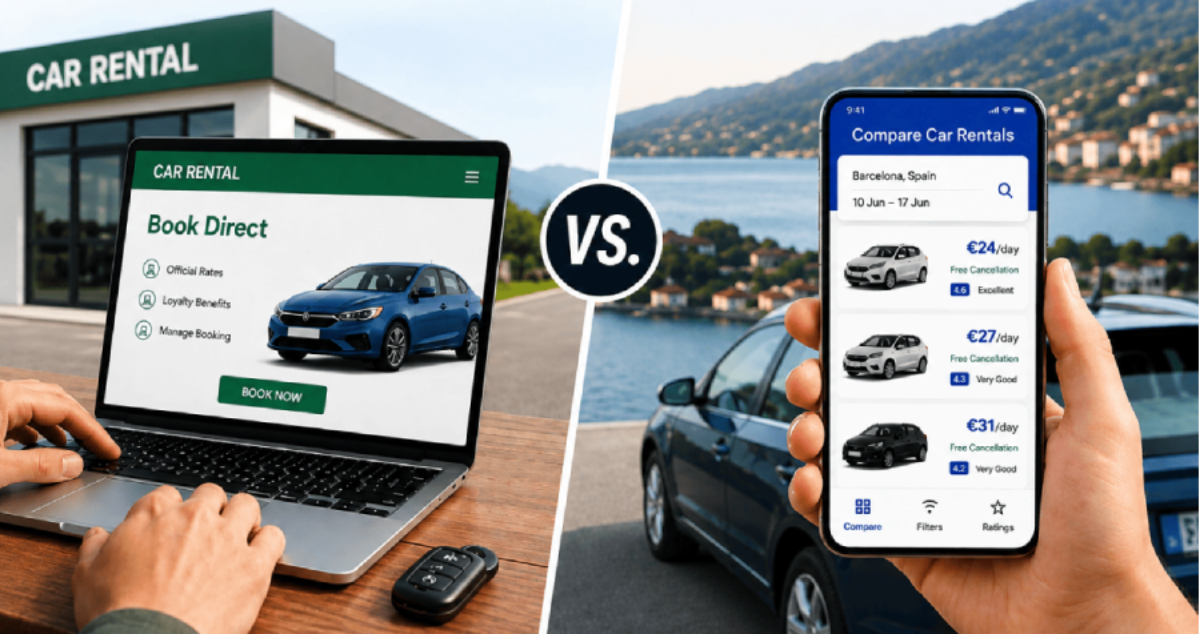



Find and compare cheap car rental deals



Get the AppBook faster with EconomyBookings
- All trips in one place
- Instant confirmation
- App-only deals